
Russian Sage


Russian Sage (Perovskia atriplicifolia)
Russian Sage brings a soft, lavender-blue haze to sunny beds and keeps going when summer heat sets in. The silvery foliage adds contrast from the moment it leafs out, making nearby greens and bright blooms look sharper. It is a reliable choice for low-water landscapes where you still want long-season color and movement. With full sun and good drainage, it settles in quickly and performs with very little upkeep.
Distinctive Features
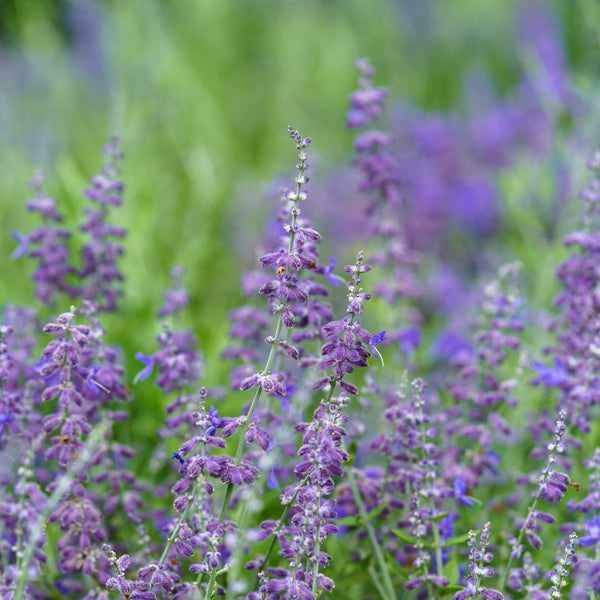
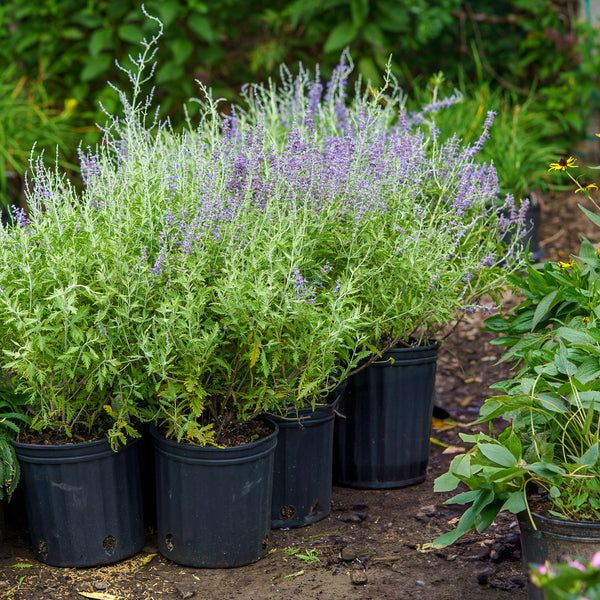
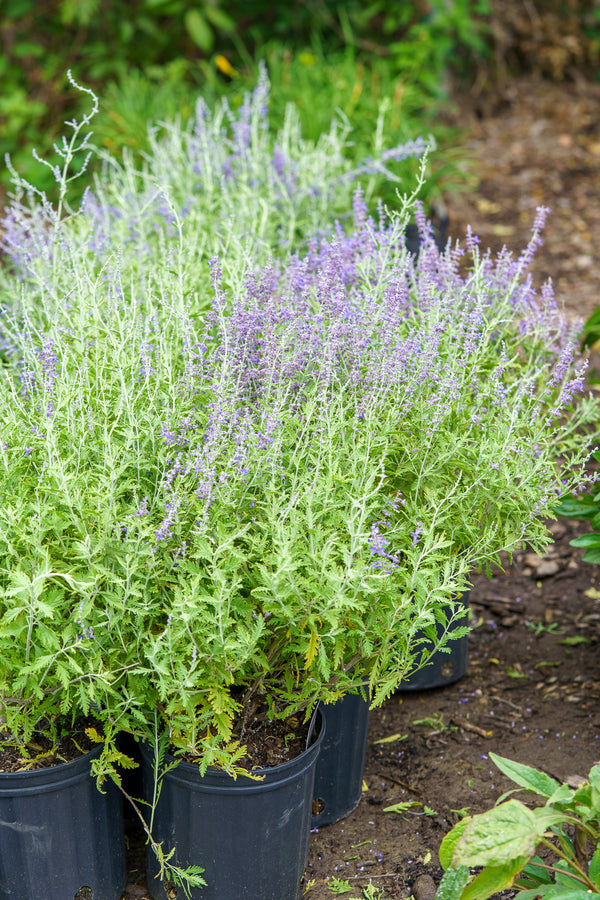
This woody-based perennial forms an airy, upright clump with aromatic, finely cut, gray-green to silvery foliage on pale stems. From mid-summer into fall, it produces branching sprays of small, tubular, lavender-blue flowers that create a light, cloud-like effect instead of a heavy block of color. The open, textured habit pairs especially well with ornamental grasses and broad-leaved perennials, adding a cool, breezy layer to hot borders. Flowers are a steady draw for bees and other pollinators during the late-season bloom window.
Growing Conditions
- Sun: Full sun for the strongest stems and best flowering.
- Soil: Well-drained soil is essential, and it performs well in average to lean soils.
- Water: Water regularly the first season, then provide low to medium moisture and avoid wet soil.
- USDA Zones: 4 to 9.
- Mature Size: About 2 to 5 feet tall and 2 to 4 feet wide.
Ideal Uses
- Focal Point: Use a single plant or a small cluster as a focal point where the lavender-blue bloom haze can float above neighboring perennials.
- Waterwise Gardens: Combine with drought-tolerant companions for high impact with lower irrigation needs.
- Perennial Borders: Plant in the middle to back of beds to add height, airiness, and long-season color.
- Mass Planting: Drift in groups to create a soft, uniform cloud effect that ties plantings together.
- Pollinator Plantings: Place near paths or patios to enjoy steady bee activity during bloom.
Low Maintenance Care
- Pruning: Cut back hard in early spring as new growth starts to keep plants dense and productive.
- Watering: Deep water during extended drought in the first year, then water only as needed once established.
- Soil Management: Avoid rich soil and heavy fertilizing, which can lead to weaker, floppy growth.
- Mulching: Mulch lightly to reduce weeds, keeping mulch off the crown to support airflow.
- Staking: Staking is rarely needed when planted in full sun with good drainage.
Why Choose Russian Sage?
- Long Bloom Season: Flowers from mid-summer into fall for dependable late-season color.
- Silvery Foliage: Gray-green leaves add contrast and a cooling tone through the heat of summer.
- Heat and Drought Tolerance: Handles hot, dry weather well once established in well-drained soil.
- Pollinator Value: Provides reliable nectar for bees and other beneficial visitors late in the season.
- Deer Resistance: Often avoided by deer compared to many other flowering perennials.
If you want a plant that makes a border feel brighter, softer, and more designed, Russian Sage is a dependable staple. Give it full sun, sharp drainage, and a simple spring cutback, and it will reward you with months of airy bloom and silver texture. It is especially effective when repeated to create a steady, calming rhythm through the garden. Once established, it delivers a lot of impact for very little maintenance.

Plant Detectives Shipping Guide
Nationwide plant shipping made easy. Learn how we ship trees, shrubs, annuals and perennials. No order too big or too small. Fast, careful, and contractor-friendly.

OUR SIZING
Not sure what 2 inch B&B or 30 Gallon Clump really means? This guide breaks down all our plant size terms so you know exactly what to expect, whether you're ordering online or picking up at our nursery. From caliper measurements to container volumes, we've decoded our system to help you shop with confidence.