
Quaking Aspen
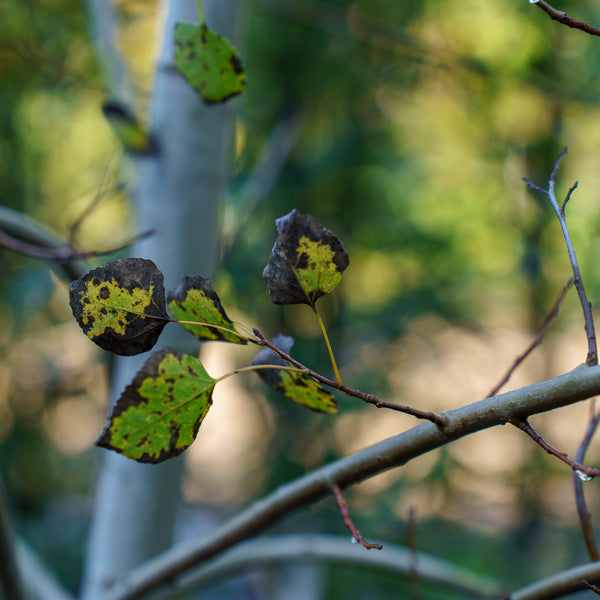
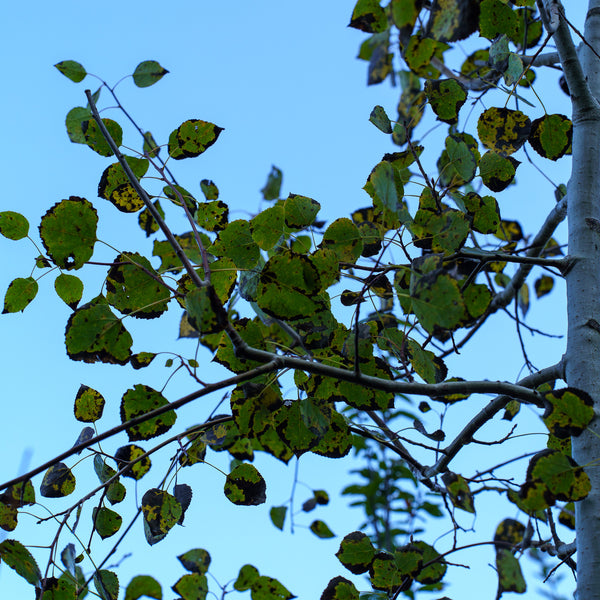


Quaking Aspen (Populus tremuloides)
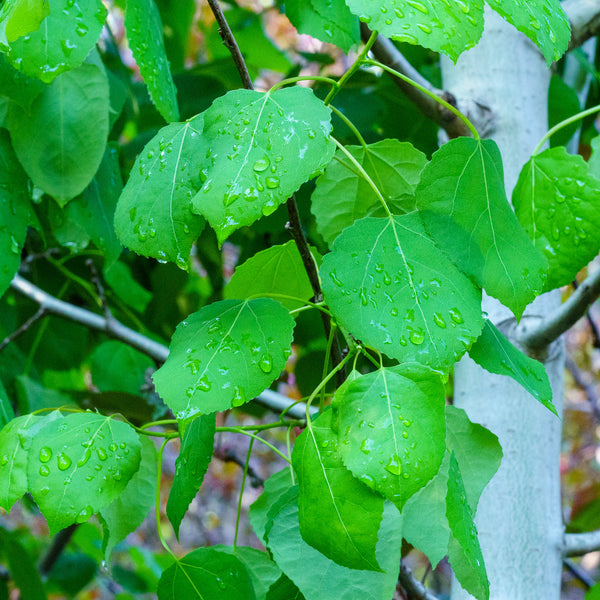
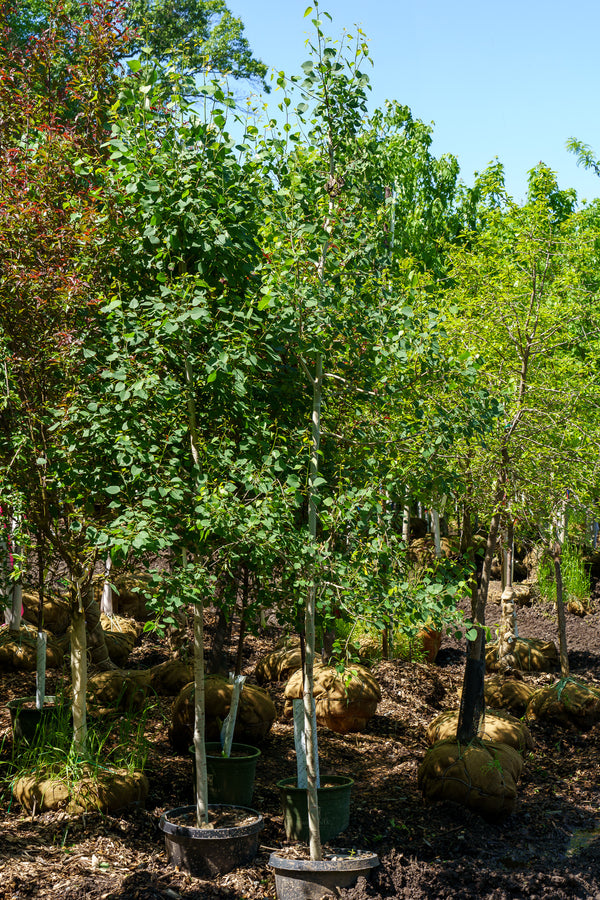
Quaking Aspen is a fast-growing native shade tree prized for its shimmering leaves and bright golden fall color. The foliage trembles in even light wind, adding movement and sound that makes a planting feel alive. It is a strong choice for naturalized spaces and larger properties where you want quick canopy and a classic mountain-forest look. Give it the right site and it can form a beautiful grove effect that changes as the seasons turn.
Distinctive Features
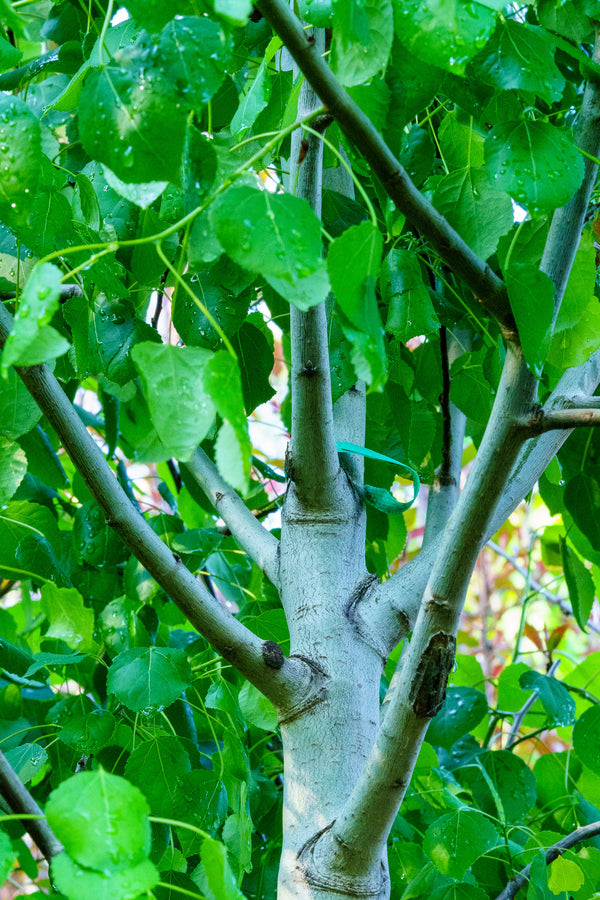
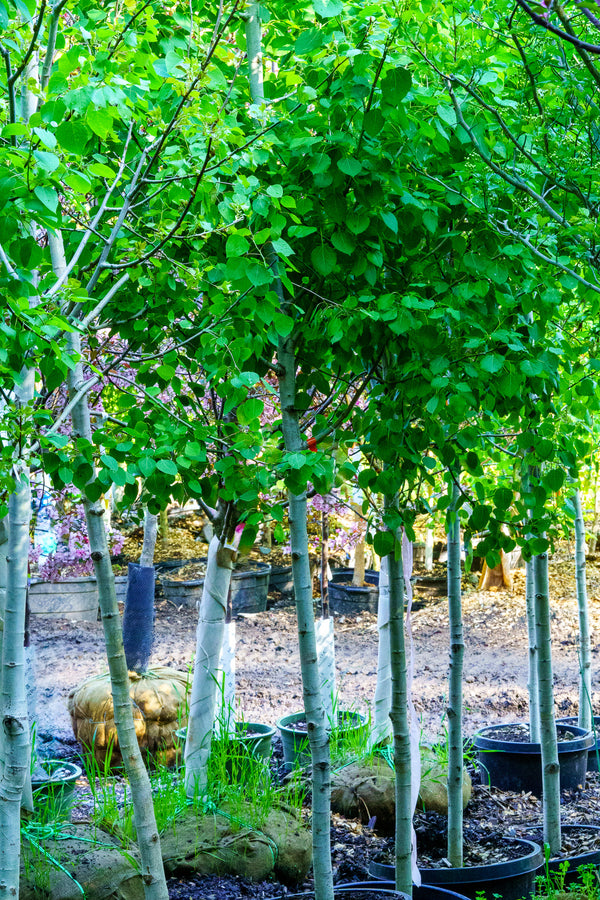
This tree is known for smooth, pale bark on younger trunks, fluttering rounded leaves on flattened stems, and a clear yellow fall display. In early spring, male and female flowers appear as separate catkins on separate trees, followed by cottony seed release later in the season. Quaking Aspen commonly spreads by root suckers, so it often forms colonies that fill in around the original planting. It performs best in cooler climates with consistent moisture and can struggle in hot, humid conditions.
Growing Conditions
- Sun: Full sun to partial shade, with best growth in full sun.
- Soil: Moist, well-drained soil is ideal, and it adapts to many soils if drainage is reasonable.
- Water: Moderate, keep evenly moist during establishment and do not allow repeated drought stress.
- USDA Zones: 2 to 7.
- Mature Size: About 40 to 50 feet tall and 20 to 30 feet wide.
- Habit: Upright when young, maturing to a rounded canopy and often forming colonies by suckering.
Ideal Uses
- Focal Point: Plant a small grove where the shimmering leaves and golden fall color can create a signature seasonal moment.
- Naturalized Plantings: Ideal for larger, informal areas where its colony-forming habit looks intentional and layered.
- Windbreak Rows: Use in mixed rows on big properties for quick height and filtered screening.
- Wildlife Areas: Adds cover and seasonal interest in habitat edges and open woodland transitions.
- Cooling Shade: Provides fast, light shade for open lawn areas when given adequate space and moisture.
Low Maintenance Care
- Pruning: Prune in late winter to remove dead or storm-damaged wood and maintain a strong central structure.
- Watering: Deep water during the first one to two growing seasons and during dry spells to reduce stress.
- Mulching: Mulch over the root zone to conserve moisture and protect roots, keeping mulch off the trunk.
- Suckers: Remove unwanted shoots at the base if you want to limit spread beyond the planting area.
- Site Fit: Avoid hot, reflected-heat locations and provide room away from hardscape if suckering is not desired.
Why Choose Quaking Aspen?
- Fast Growth: Builds canopy quickly for earlier shade and presence.
- Fall Color: Delivers a strong golden autumn display that reads from a distance.
- Movement and Texture: Fluttering leaves add motion and a lighter, more dynamic canopy.
- Natural Grove Effect: Can form a colony that creates a beautiful woodland feel over time.
- Native Character: Brings a classic North American landscape look that fits naturalized designs.
If you want quick shade and a tree that changes the feel of a space with sound, motion, and fall color, Quaking Aspen is a great fit. Plant it where soil stays reasonably moist and where a spreading grove habit is welcome, and it can become a long-term landscape feature that feels more immersive each year.

Plant Detectives Shipping Guide
Nationwide plant shipping made easy. Learn how we ship trees, shrubs, annuals and perennials. No order too big or too small. Fast, careful, and contractor-friendly.

OUR SIZING
Not sure what 2 inch B&B or 30 Gallon Clump really means? This guide breaks down all our plant size terms so you know exactly what to expect, whether you're ordering online or picking up at our nursery. From caliper measurements to container volumes, we've decoded our system to help you shop with confidence.