
Lemony Lace Elderberry
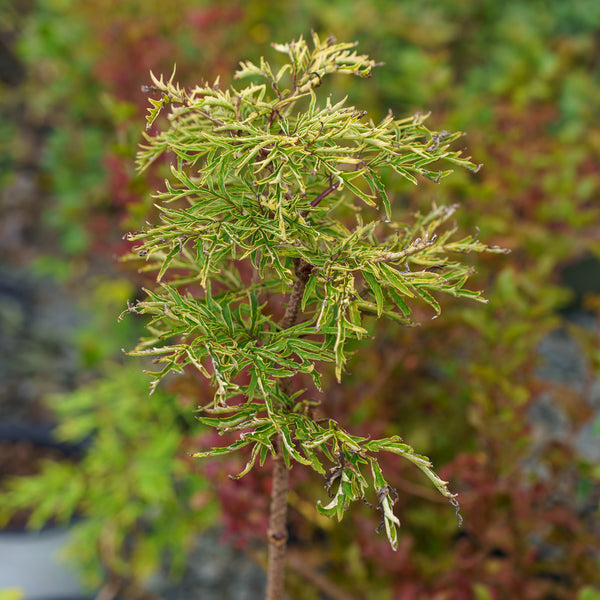
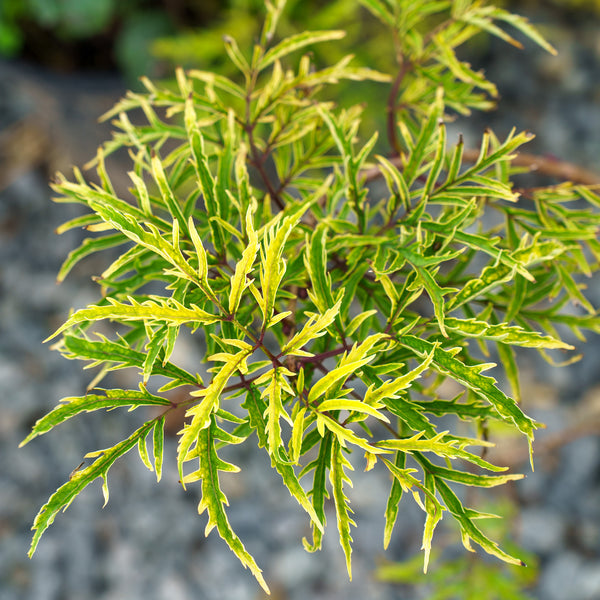


Lemony Lace Elderberry (Sambucus racemosa 'SMNSRD4')
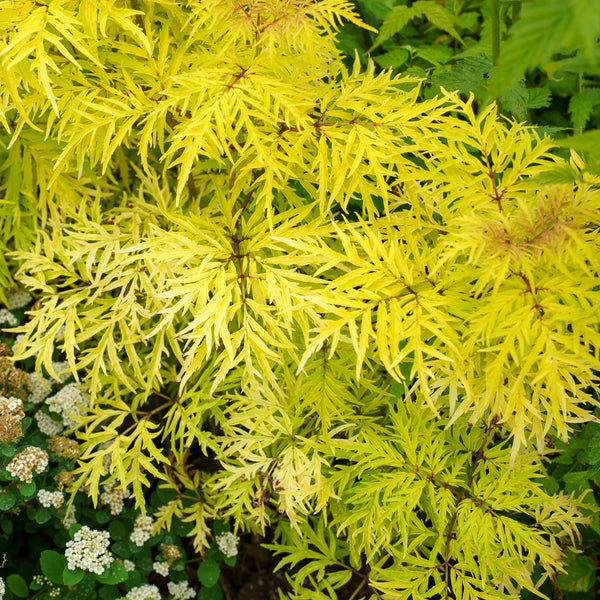
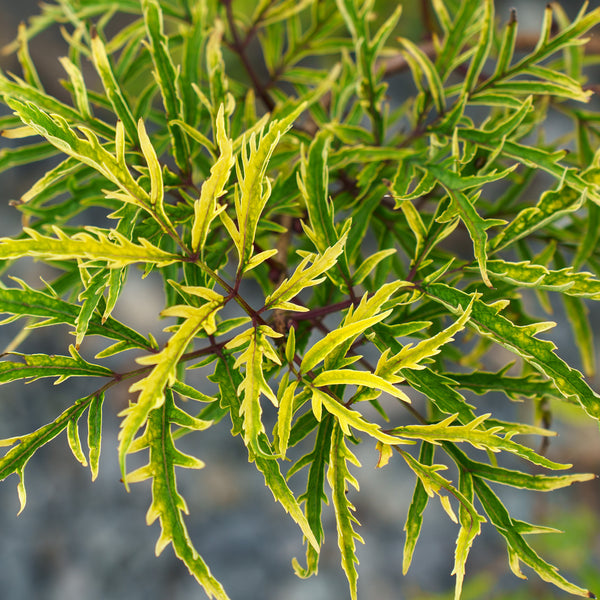
Lemony Lace Elderberry brings bright, finely cut foliage that reads like living lace in the landscape and keeps beds looking energized all season. New growth often shows warm red tones, then matures to golden yellow and chartreuse for a high-contrast look that pairs easily with darker shrubs and evergreens. In spring, clusters of small white flowers add a soft bloom moment, followed by red berries that draw birds later in the season. It is a strong choice when you want bold foliage color with a shrub that also helps fill space and add structure.
Distinctive Features
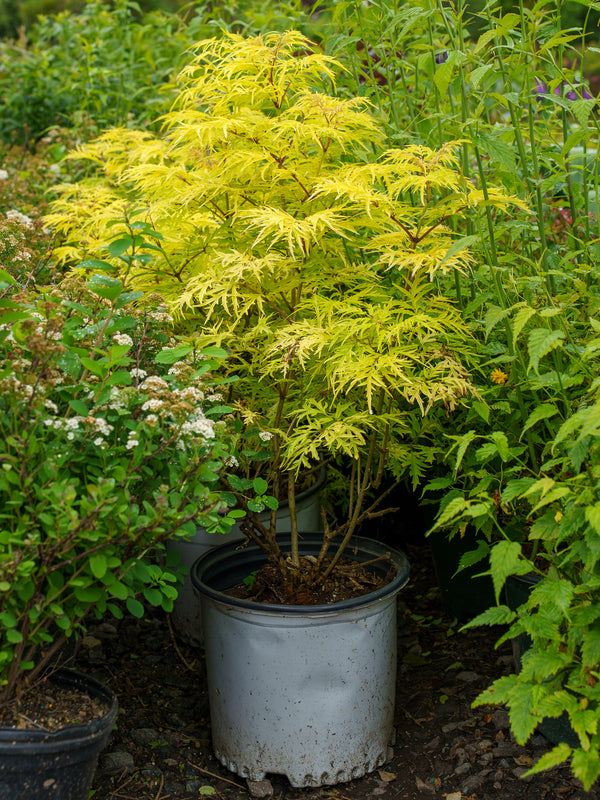
This deciduous elderberry forms a compact, irregularly mounding shrub with deeply dissected leaves and an exceptionally fine texture. White flower clusters appear in spring, often before the newest foliage fully expands, then develop into showy red berry clusters that stand out against the bright leaves. Foliage color typically shifts from golden tones with red-tinged new growth to a more lime or chartreuse finish as the season progresses. The plant can spread by suckers over time, which helps it create fuller mass plantings when space allows.
Growing Conditions
- Sun: Full sun to part shade, with best foliage color and density in full sun.
- Soil: Moist, humus-rich, well-drained soil is ideal, and it tolerates a wide range of soils including wetter ground.
- Water: Medium to wet, keep evenly moist during establishment and do not allow soil to dry out for long periods.
- USDA Zones: Hardy in zones 3 to 7.
- Mature Size: Typically 3 to 5 feet tall and 4 to 6 feet wide.
Ideal Uses
- Focal Point: Use as a bright foliage feature where the lacy chartreuse leaves can light up a key view in spring through fall.
- Mixed Shrub Borders: Pair with deep green or purple foliage shrubs to create strong contrast and better depth.
- Screening: Plant in groups for an informal screen with colorful foliage and seasonal flower and berry interest.
- Moist Areas: Use near low spots or along pond and stream edges where consistent moisture supports vigorous growth.
- Wildlife Plantings: Include in naturalized borders where berries can support birds later in the season.
Low Maintenance Care
- Pruning: Prune in late winter to early spring to remove weak or older stems, and cut some stems back harder if you want to refresh foliage and shape.
- Watering: Water regularly the first season, then maintain consistent moisture during heat and drought for best foliage quality.
- Mulching: Mulch to conserve moisture and moderate soil temperature, keeping mulch pulled back from the base of stems.
- Suckers: Remove suckers as needed if you want to limit spreading and keep a cleaner edge.
- Placement: Provide some shelter from strong wind and heavy snow load to reduce stem breakage.
Why Choose Lemony Lace Elderberry?
- High-Impact Foliage: Deeply cut leaves deliver bright chartreuse to golden color with a fine, airy texture.
- Seasonal Progression: Spring flowers and red berries add interest beyond foliage alone.
- Moisture Tolerance: Handles wetter soils better than many ornamental shrubs, expanding placement options.
- Easy Contrast: Bright foliage makes dark evergreens, burgundy shrubs, and flowering perennials look sharper.
- Wildlife Value: Berries are highly attractive to birds and help bring movement and life to the garden.
Lemony Lace Elderberry is most effective when you give it space to show off its lacy texture and let the foliage color do the heavy lifting. Plant it in sun for the brightest tones, keep moisture consistent, and prune periodically to maintain fresh, vigorous stems. Used as a feature or repeated in mass, it adds lasting brightness and structure with a natural, easy feel.

Plant Detectives Shipping Guide
Nationwide plant shipping made easy. Learn how we ship trees, shrubs, annuals and perennials. No order too big or too small. Fast, careful, and contractor-friendly.

OUR SIZING
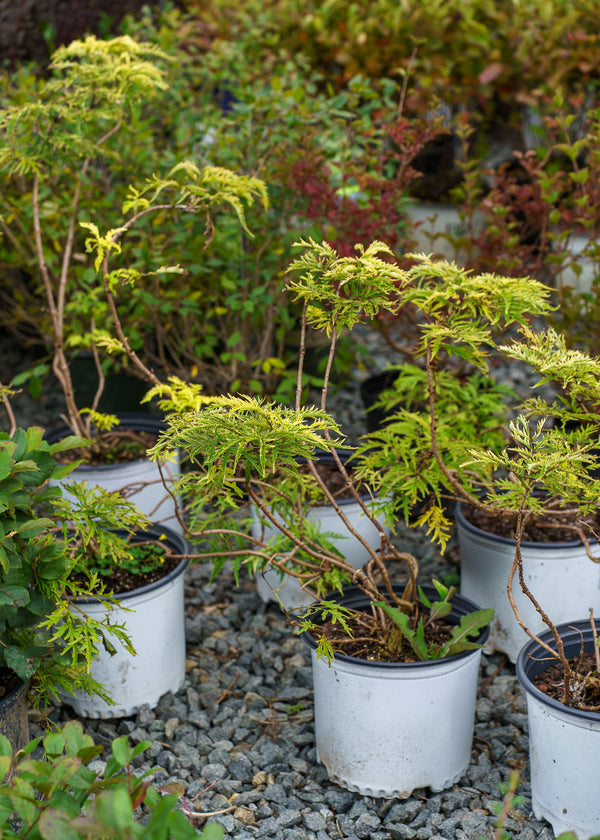
Not sure what 2 inch B&B or 30 Gallon Clump really means? This guide breaks down all our plant size terms so you know exactly what to expect, whether you're ordering online or picking up at our nursery. From caliper measurements to container volumes, we've decoded our system to help you shop with confidence.