
Hungry Eyes Daylily

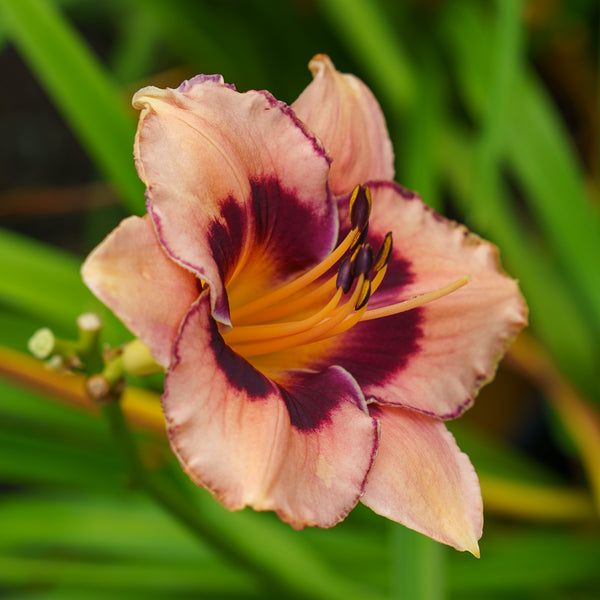
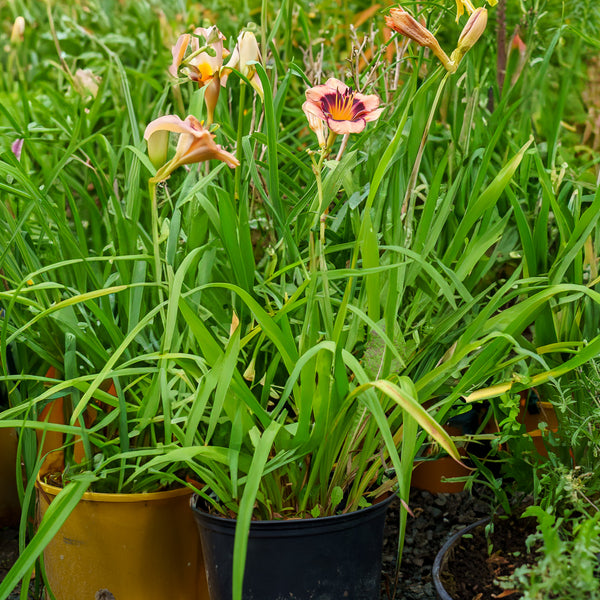
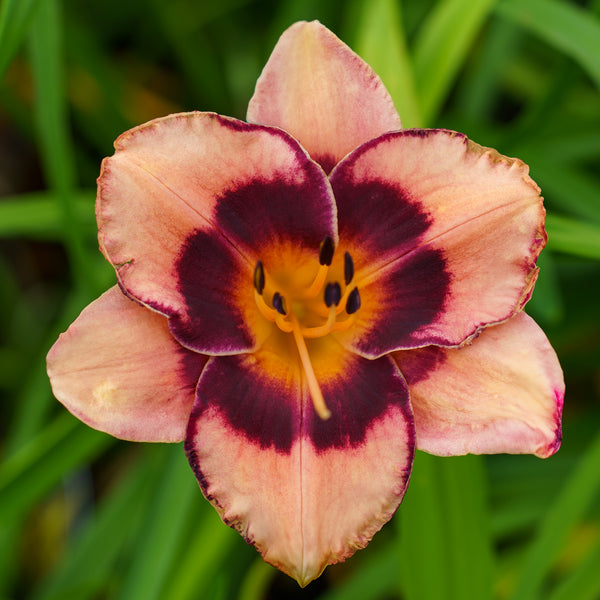


Hungry Eyes Daylily (Hemerocallis 'Hungry Eyes')
Hungry Eyes Daylily brings an unusual blend of soft peachy rose color and a dramatic darker eye to the summer garden in a plant that feels both refined and easy to grow. Its bicolor pattern adds more interest than a plain pink daylily, helping borders feel brighter and more layered through midsummer and beyond. This variety is especially useful where you want a daylily with softer tones but enough contrast to stand out clearly in mixed plantings. In sunny borders, mass plantings, and larger containers, it adds a fresh and memorable layer of color with very little fuss.
Distinctive Features
Hungry Eyes Daylily is prized for its 5 inch mauve-rose to peach-rose flowers with a warm orange cast, contrasted by a bold wine-red eye and matching picotee edge. The flowers are carried above clumps of arching green strap-like foliage on scapes that typically reach about 20 to 22 inches tall. It is generally listed as a midsummer to late summer bloomer with rebloom potential, which helps extend the display beyond a single flush. Its strong eye pattern and edged petals give it a more decorative and layered look than many softer-toned daylilies.
Growing Conditions
- Sun: Plant in full sun for the best flowering, though part shade is tolerated, especially in hotter regions.
- Soil: Grow in average, well-drained soil, though it adapts well to poor, average, or fertile garden soils.
- Water: Provide moderate water during establishment, then maintain average moisture, with best flowering from more consistent moisture.
- Zones: Hardy in USDA Zones 3 to 9.
- Habit: Expect a compact clump-forming perennial with arching green strap-like foliage and upright flower scapes.
Ideal Uses
- Perennial Borders: Use it in sunny mixed borders where the mauve-rose flowers and dark eye can add richer midsummer contrast.
- Focal Point: Place it in a visible section of the bed where its patterned blooms can create a refined seasonal highlight.
- Mass Planting: Plant it in groups where repeated blooms can create a broad sweep of warm pink and wine-red summer color.
- Edging: Use it along sunny paths and border fronts where its compact habit can provide color without excessive height.
- Containers: Grow it in large containers where the distinctive flowers can be enjoyed up close through the bloom season.
Low Maintenance Care
- Watering: Water regularly during establishment, then provide supplemental moisture during extended dry periods for best bloom performance.
- Deadheading: Remove spent blooms and old scapes to keep the plant tidy and encourage a cleaner rebloom cycle.
- Division: Divide clumps every few years if needed to maintain vigor and support strong flowering.
- Cleanup: Remove worn foliage in late season or early spring to refresh the clump.
- Feeding: A light spring feeding can support healthy foliage and repeat bloom without pushing excessive soft growth.
Why Choose Hungry Eyes Daylily?
- Distinctive Eye Pattern: The wine-red eye and matching picotee edge give the flowers more depth and decorative detail than many soft-colored daylilies.
- Compact Garden Fit: Its moderate size makes it easy to use in borders, edging, and larger containers.
- Rebloom Potential: It can flower again after the first flush, extending color farther into the season.
- Easy Garden Performance: It adapts well to many soils and handles the everyday demands of sunny perennial plantings.
- Fresh Color Blend: Mauve-rose petals with a warm cast help it blend easily with both cool and warm summer companions.
Hungry Eyes Daylily is an excellent choice for gardeners who want a daylily with softer flower color and stronger pattern contrast. Its compact habit keeps it easy to place, while the rich eye zone and reblooming habit give it more lasting value in the border. In sunny beds, grouped plantings, and patio containers, it delivers a polished and memorable summer display.

Plant Detectives Shipping Guide
Nationwide plant shipping made easy. Learn how we ship trees, shrubs, annuals and perennials. No order too big or too small. Fast, careful, and contractor-friendly.

OUR SIZING
Not sure what 2 inch B&B or 30 Gallon Clump really means? This guide breaks down all our plant size terms so you know exactly what to expect, whether you're ordering online or picking up at our nursery. From caliper measurements to container volumes, we've decoded our system to help you shop with confidence.