
Bottlebrush Buckeye
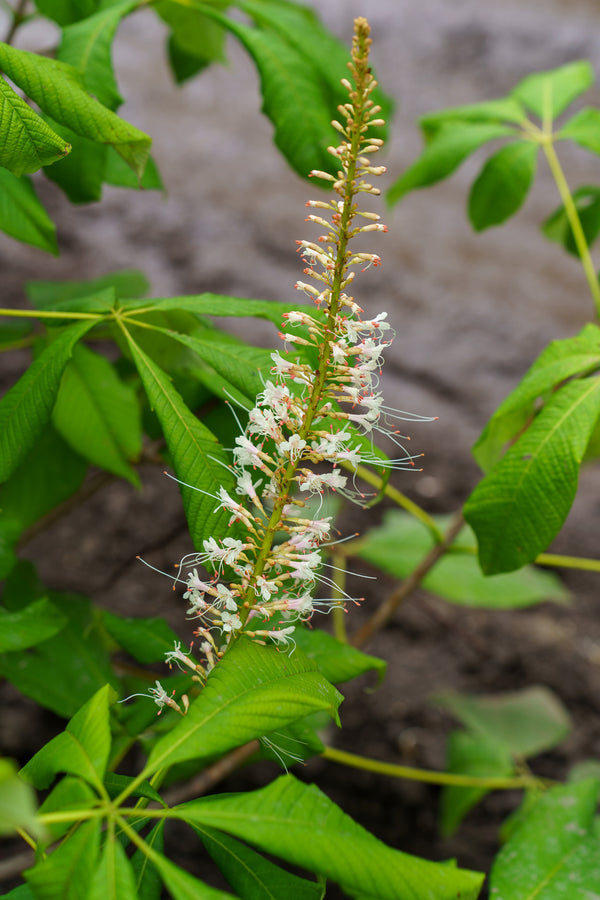


Bottlebrush Buckeye (Aesculus parviflora)
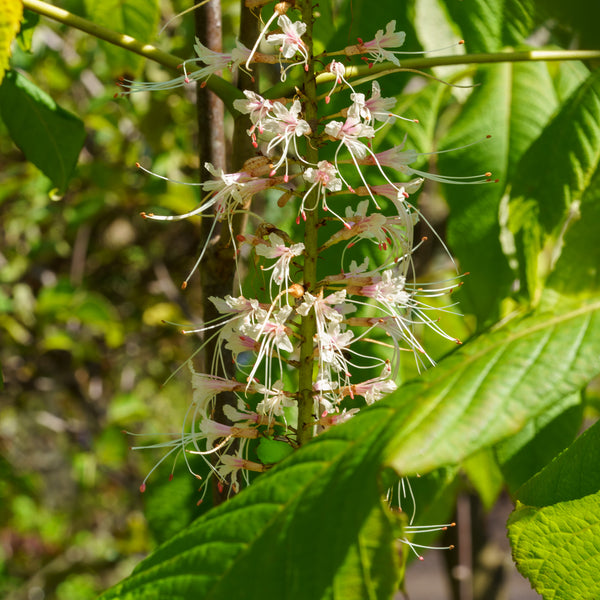
Bottlebrush Buckeye is one of the best summer-blooming shrubs for shade, filling woodland edges and shady borders with dramatic white flower candles. It forms a broad, leafy mass that feels lush and cooling, especially where other shrubs struggle to flower. The blooms draw pollinators in early to mid summer, then the plant settles back into bold, green texture that holds the bed together. If you want a long-lived shrub that makes shade feel intentional instead of empty, this is a strong choice.
Distinctive Features
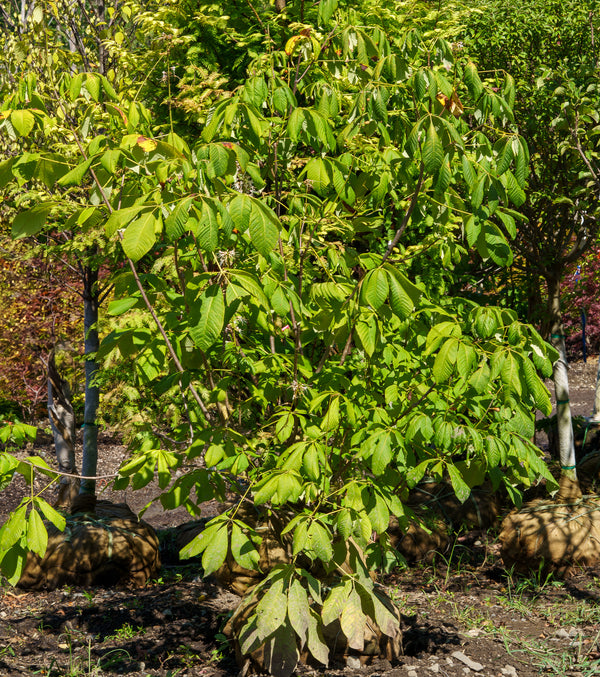
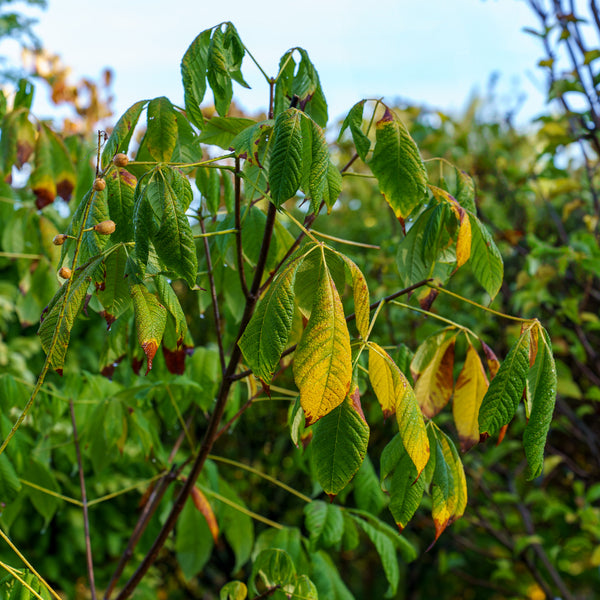
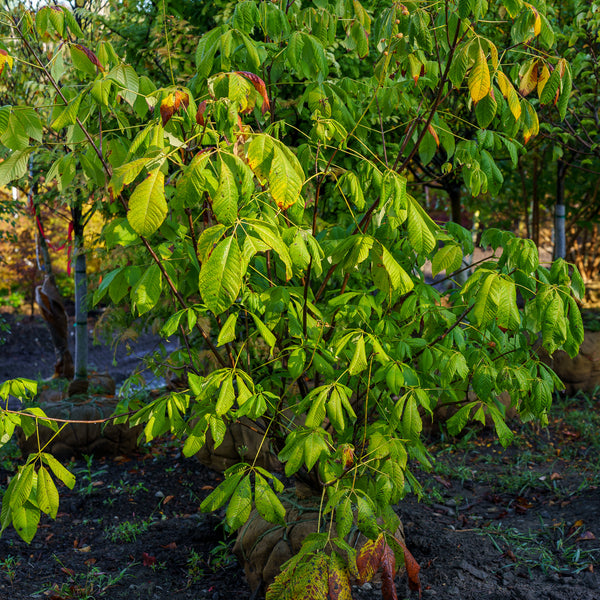
This deciduous, multi-stemmed shrub spreads by suckers to form colonies, creating a dense, mounded habit with large, palmately compound leaves. In early to mid summer it produces upright, cylindrical panicles of tubular white flowers with showy red anthers, giving the plant its bottlebrush look. Foliage often turns an attractive yellow in fall, and small buckeye fruits may develop later in the season.
Growing Conditions
- Sun: Part shade to full shade, with more sun tolerated in cooler climates when soil moisture is consistent.
- Soil: Rich, fertile, moist, well-drained soil that does not dry out for long periods.
- Water: Medium, keep evenly moist during establishment and provide supplemental water during drought.
- Zones: USDA Zones 4 to 8.
- Mature Size: About 8 to 12 feet tall and 8 to 15 feet wide, often wider over time as colonies expand.
- Habit: Dense, mounded, suckering shrub that can naturalize into a broad mass.
Ideal Uses
- Focal Point: Use Bottlebrush Buckeye as a focal point in a shaded bed where the summer flower spikes can become the main event.
- Woodland Borders: Plant along woodland edges to create a lush understory layer with bold leaf texture.
- Naturalized Masses: Use in groups where it can spread into a colony for a dramatic, low-maintenance sweep.
- Shade Screening: Plant as a tall, leafy screen for seasonal privacy in part shade locations.
- Pollinator Gardens: Include in shade-friendly pollinator plantings to support butterflies and other beneficial insects.
Low Maintenance Care
- Watering: Do not let young plants dry out repeatedly, since consistent moisture supports best growth and flowering.
- Pruning: Prune lightly after flowering or in late winter to remove damaged wood and maintain a clean outline.
- Colony Control: Thin suckers at the edge if you want to limit spread, or allow them to fill in for a broader mass.
- Mulching: Mulch to conserve soil moisture and keep roots cooler, especially in sunnier exposures.
- Site Fit: Avoid hot, dry sites where leaf stress and reduced flowering are more likely.
Why Choose Bottlebrush Buckeye?
- Shade Bloom Power: Delivers a standout summer flower show in part shade to shade.
- Bold Texture: Large leaves create a lush, substantial look that anchors woodland-style plantings.
- Pollinator Friendly: Flowers attract butterflies and add life to the summer garden.
- Colony Forming: Spreads into a broad mass that can fill large spaces with minimal fuss.
- Low Maintenance Presence: With moisture and space, it becomes a long-lived shrub that improves over time.
Bottlebrush Buckeye shines when you give it shade, rich soil, and steady moisture, then let it grow into its naturally broad, layered form. Place it where the summer bloom spikes can be appreciated and where it has room to expand into a colony if desired. In the right setting, it turns shade into a feature and delivers a memorable mid-summer display year after year.
OUR SIZING
Not sure what 2 inch B&B or 30 Gallon Clump really means? This guide breaks down all our plant size terms so you know exactly what to expect, whether you're ordering online or picking up at our nursery. From caliper measurements to container volumes, we've decoded our system to help you shop with confidence.

Plant Detectives Shipping Guide
Nationwide plant shipping made easy. Learn how we ship trees, shrubs, annuals and perennials. No order too big or too small. Fast, careful, and contractor-friendly.