
Bailey's Red Twig Dogwood


Bailey's Red Twig Dogwood (Cornus sericea 'Baileyi')
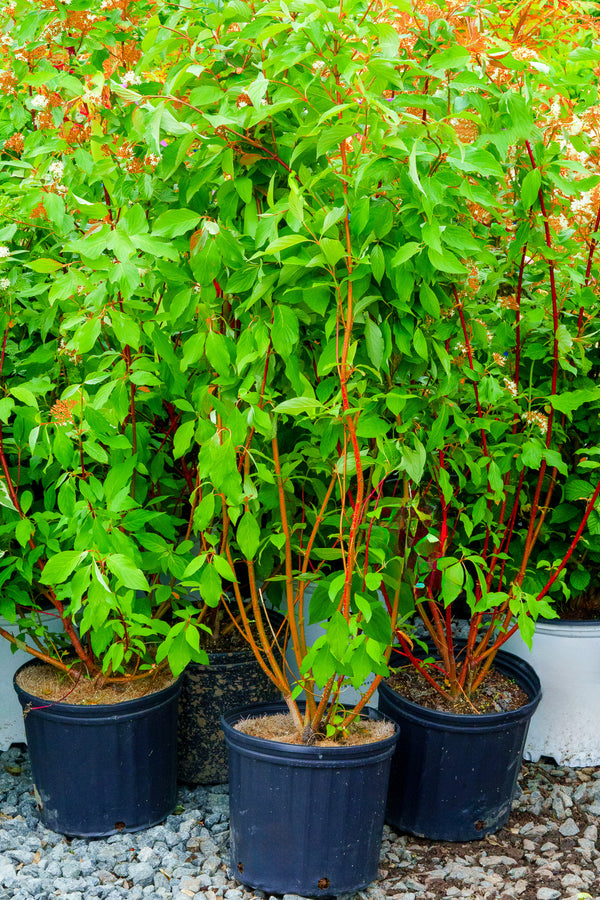
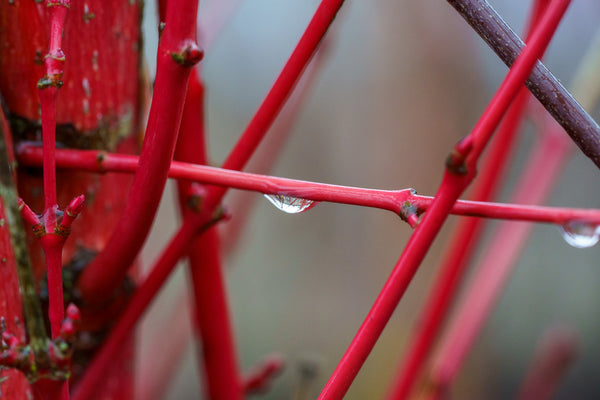
Bailey's Red Twig Dogwood is a fast-growing native shrub prized for vivid red winter stems that keep the landscape looking alive after leaf drop. In warmer months it fills in with dense green foliage, then adds a soft spring flower display before transitioning into summer fruit that supports birds. It is especially useful where you want a shrub that tolerates moisture and still looks intentional in a designed bed. With simple renewal pruning, it stays full and keeps producing the youngest, brightest stems for winter color.
Distinctive Features
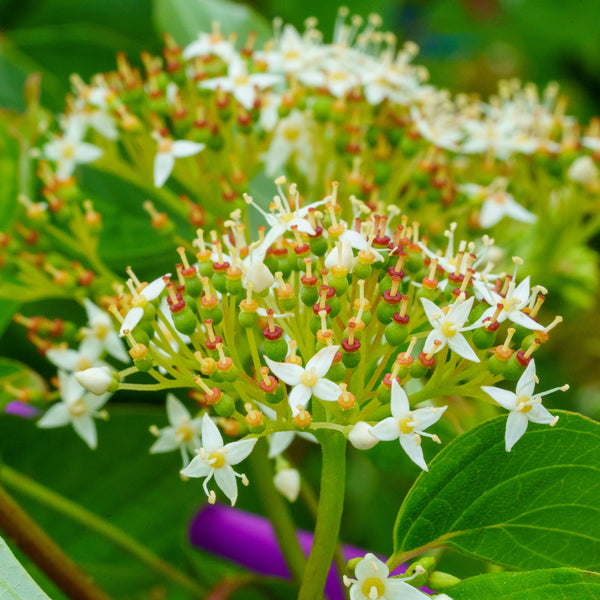
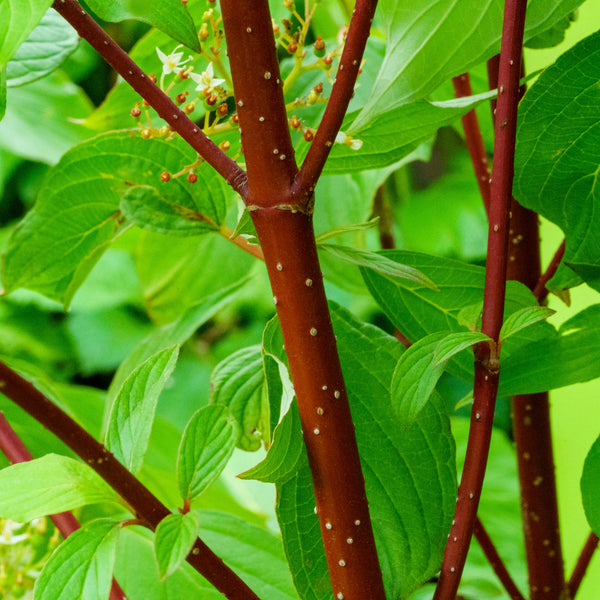
This multi-stemmed, suckering dogwood produces flat clusters of small white flowers in late spring to early summer, followed by clusters of white drupes that may show a bluish tinge. Leaves are medium to dark green through summer and often shift to red, orange, or purple tones in fall before dropping. The strongest ornamental feature is the bright red winter stem color, which is most intense on new growth.
Growing Conditions
- Sun: Full sun to partial shade, with best stem color and density in full sun.
- Soil: Adaptable to many soils, including clay, and performs well in moist sites with reasonable drainage.
- Water: Medium to wet moisture, keep consistently moist during establishment and do not allow repeated drought stress.
- Zones: USDA Zones 2 to 8.
- Mature Size: About 6 to 8 feet tall and 6 to 10 feet wide.
- Habit: Upright to rounded, multi-stemmed, and prone to suckering over time.
- Bloom: White flower clusters in late spring to early summer.
- Fruit: White drupes in summer that can attract birds.
Ideal Uses
- Focal Point: Use Bailey's Red Twig Dogwood as a focal point in a winter-view bed where bright stems are visible from windows, walkways, or an entry approach.
- Screening: Plant in groups to form a tall, leafy seasonal screen that transitions into strong winter structure.
- Rain Gardens: Use on the edges of rain gardens and other moisture-holding sites where consistent water supports vigorous growth.
- Hedges and Masses: Mass along property lines or borders for a bigger block of winter color and a fuller summer backdrop.
- Wildlife Plantings: Include in habitat borders for pollinator value in bloom and fruit that supports birds.
Low Maintenance Care
- Pruning: Remove about one third of the oldest stems at ground level in late winter to early spring to promote bright new stem growth.
- Coppicing Option: Cut the entire plant back to about 6 to 12 inches every few years for maximum stem color if space allows.
- Watering: Water deeply during extended heat and drought, especially in the first few seasons and on lighter soils.
- Mulching: Mulch to conserve moisture and reduce weeds, keeping mulch a few inches away from the stems.
- Spread Control: Thin suckers or edge the planting if you want a cleaner outline and tighter footprint.
Why Choose Bailey's Red Twig Dogwood?
- Bright Winter Stems: Strong red twig color delivers reliable winter interest when most shrubs fade into the background.
- Moisture Tolerance: Handles wetter soils better than many shrubs, making it a practical choice for challenging sites.
- Fast Seasonal Coverage: Fills in quickly for summer screening and border structure.
- Wildlife Support: Flowers support pollinators and the fruit can provide seasonal value for birds.
- Easy Renewal: Simple pruning keeps the plant vigorous and maintains the best stem color year after year.
Bailey's Red Twig Dogwood performs best with sun, consistent moisture, and a yearly pruning routine that favors fresh stems. Give it room to broaden, or thin it regularly if you want a tighter hedge line. In mass plantings, rain-garden edges, and winter-view beds, it provides dependable color and structure across every season.

Plant Detectives Shipping Guide
Nationwide plant shipping made easy. Learn how we ship trees, shrubs, annuals and perennials. No order too big or too small. Fast, careful, and contractor-friendly.

OUR SIZING
Not sure what 2 inch B&B or 30 Gallon Clump really means? This guide breaks down all our plant size terms so you know exactly what to expect, whether you're ordering online or picking up at our nursery. From caliper measurements to container volumes, we've decoded our system to help you shop with confidence.