
Red Tip Photinia
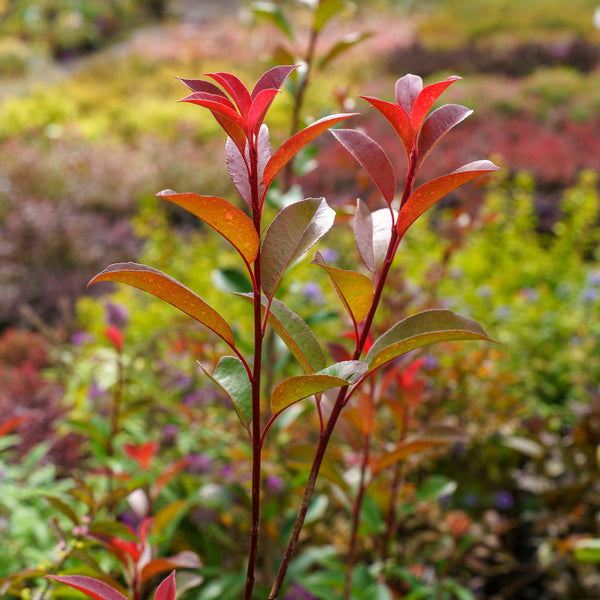
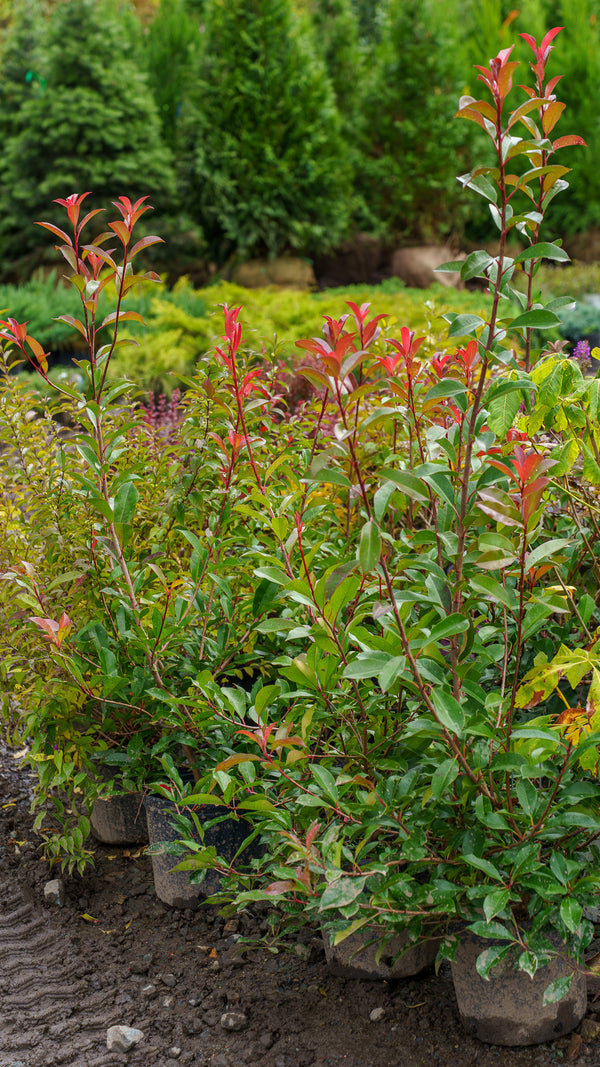
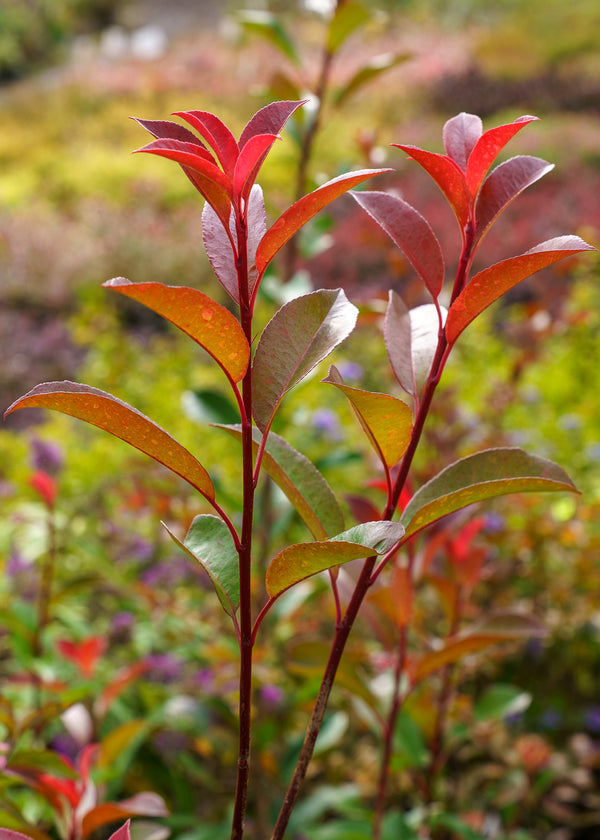


Red Tip Photinia (Photinia x fraseri)
Red Tip Photinia is a broadleaf evergreen shrub that brings fast, full coverage and a bold flush of color when new growth emerges. Fresh leaves start out red to coppery red, then mature to glossy deep green, giving the plant a lively, two-tone look through spring and early summer. It can be grown as a large shrub or trained into a small tree, making it flexible for screening and structure in sunny landscapes. When sited well, it provides a dense backdrop that helps the rest of the garden feel more finished and private.
Distinctive Features
This photinia is known for its red new foliage, leathery evergreen leaves, and clusters of small white flowers in spring. The upright, vigorous habit responds well to pruning, which can encourage dense branching and a fuller outline. In some situations it may produce small red fruits, but fruiting is often limited. It is also known for susceptibility to Entomosporium leaf spot, so airflow and leaf-dry conditions are important for long-term good looks.
Growing Conditions
- Sun: Full sun to part shade, with best color and density in full sun.
- Soil: Average, well-drained soil, and avoid persistently wet sites.
- Water: Moderate water to establish, then low to moderate, with deep watering during extended dry periods.
- USDA Zones: Hardy in zones 7 to 9.
- Mature Size: Typically 10 to 15 feet tall and 8 to 12 feet wide without regular size control pruning.
Ideal Uses
- Focal Point: Use as a bold evergreen accent where the spring flush of red growth can be seen from a main view.
- Screening: Plant in rows for a dense privacy screen along property lines and outdoor living areas.
- Hedges: Shape into an informal hedge where you want thick coverage and a strong green wall effect.
- Backdrops: Place behind perennials and smaller shrubs to add height, depth, and year-round structure.
- Small Tree Form: Limb up and train as a small specimen tree for evergreen structure with seasonal color.
Low Maintenance Care
- Pruning: Prune after the spring flush or after flowering to shape and encourage dense branching, avoiding repeated heavy shearing in humid climates.
- Watering: Water consistently during the first season, then water at the root zone during drought to reduce stress.
- Mulching: Mulch to conserve moisture and reduce weeds, keeping mulch pulled back from the stems.
- Air Circulation: Space plants properly and thin lightly to improve airflow, which helps reduce leaf spot pressure.
- Leaf Care: Avoid overhead watering when possible to keep foliage drier and reduce disease risk.
Why Choose Red Tip Photinia?
- Fast Screening: Vigorous growth builds privacy and coverage quickly in sunny landscapes.
- Colorful New Growth: Red to coppery red spring foliage adds seasonal impact without relying on flowers.
- Evergreen Structure: Glossy leaves provide year-round presence and a strong backdrop for mixed plantings.
- Flexible Form: Works as a large shrub, a hedge, or a trained small tree depending on your design goals.
- Big-Bed Utility: Fills space and provides scale in larger borders and open property edges.
Red Tip Photinia is best used where you can give it sun, room, and airflow so it can stay dense and attractive. Treat it as a structure plant, then let the red new growth provide the seasonal highlight that makes the planting feel fresh. With sensible pruning and foliage-friendly watering, it can be a strong option for creating privacy and evergreen mass in the right setting.

Plant Detectives Shipping Guide
Nationwide plant shipping made easy. Learn how we ship trees, shrubs, annuals and perennials. No order too big or too small. Fast, careful, and contractor-friendly.

OUR SIZING
Not sure what 2 inch B&B or 30 Gallon Clump really means? This guide breaks down all our plant size terms so you know exactly what to expect, whether you're ordering online or picking up at our nursery. From caliper measurements to container volumes, we've decoded our system to help you shop with confidence.