
Orchid Cream Nasturtium
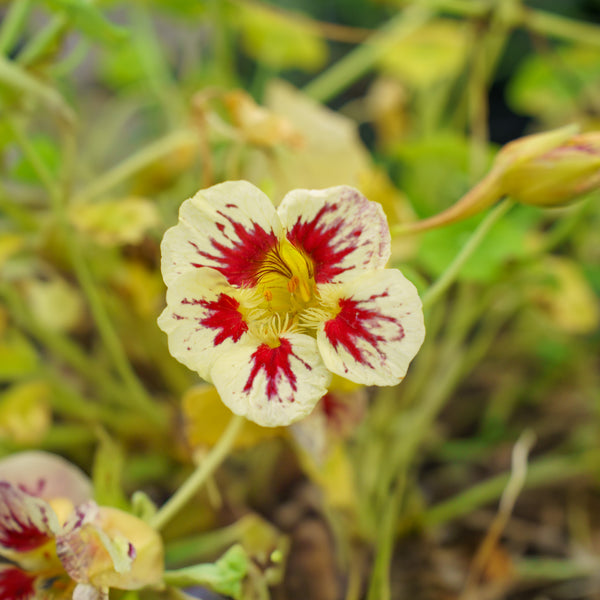
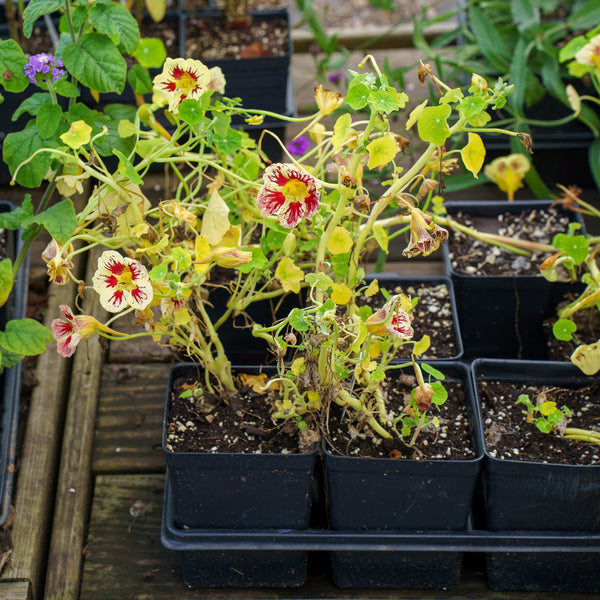
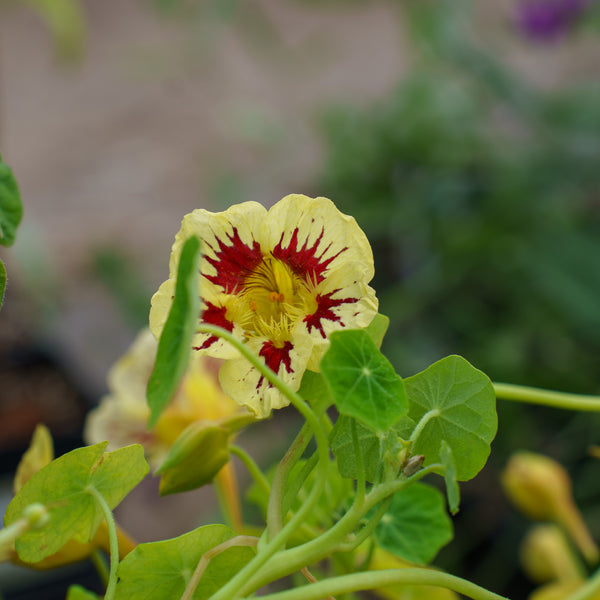


Orchid Cream Nasturtium (Tropaeolum majus 'Orchid Cream')
Orchid Cream Nasturtium is a warm-season annual that brings a soft, creamy flower color with dramatic red splashes, then often deepens toward pink and red as the blooms age. It is an easy way to get fast, cheerful color in beds and containers, especially in spots that bake in sun. The rounded, lily pad style leaves add bold texture that looks good even between bloom waves. Flowers and leaves are edible with a peppery flavor, so it adds both beauty and usefulness to kitchen gardens.
Distinctive Features
This cultivar is known for chameleon-like blooms that open cream to pale yellow with a red blotch, then can shift toward deeper pink to red tones depending on temperature and light. Plants form a compact, mounding habit that can also spill slightly over edges, creating a full, cushioned look. Bloom runs from early summer into fall, with best performance in sun and moderate moisture. The foliage is smooth, round, and dense, giving the plant a clean, graphic presence in any planting style.
Growing Conditions
- Sun: Full sun to partial shade, with best flowering in full sun and some afternoon shade helpful in very hot climates.
- Soil: Average to poor, well-drained soil, and overly rich soil can reduce flowering.
- Water: Moderate water, keep evenly moist while establishing, then let the top layer dry slightly between soakings.
- USDA Zones: Grown as an annual in most regions, and can be perennial in USDA Zones 9 to 11 where frosts are light.
- Mature Size: Typically about 10 to 12 inches tall and about 10 to 18 inches wide, with some trailing at edges.
Ideal Uses
- Focal Point: Use as a focal point in a patio pot where the cream-and-red blooms can be enjoyed up close as they shift color.
- Containers: Plant in pots and window boxes for compact color that fills quickly and stays cheerful all season.
- Edging: Line sunny bed edges for a soft, mounded ribbon of bloom and bold leaf texture.
- Kitchen Garden: Grow near herbs and vegetables for edible flowers and a bright, cottage-style look.
- Pollinator Planting: Add to sunny beds to attract pollinators through the bloom season.
Low Maintenance Care
- Deadheading: Remove spent flowers to keep plants tidy and encourage continued blooming.
- Watering: Water more often in containers and during heat, but avoid constantly wet soil.
- Feeding: Feed lightly or not at all, since rich soil can push leaves over flowers.
- Pruning: Trim back leggy stems to refresh growth and keep the plant compact.
- Seeding: Allow a few seed pods to mature if you want volunteer seedlings next season.
Why Choose Orchid Cream Nasturtium?
- Color Shift Interest: Blooms can change from creamy tones with red splashes to deeper pink and red shades over time.
- Fast Seasonal Coverage: Quick growth fills gaps in beds and containers with minimal effort.
- Edible Value: Flowers and leaves add a peppery bite that works well as a garnish or salad ingredient.
- Low Input Performance: Thrives in sun and lean soil without heavy feeding.
- Easy Design Tool: Bold round leaves and warm-toned blooms pair well with vegetables, herbs, and summer annuals.
If you want an annual that feels soft and unusual up close but still reads as bright color from a distance, Orchid Cream Nasturtium is a strong choice. Give it sun, drainage, and modest soil, and it will reward you with months of bloom and easy texture. It is especially effective when planted in small groups so the shifting flower colors look intentional rather than scattered.

Plant Detectives Shipping Guide
Nationwide plant shipping made easy. Learn how we ship trees, shrubs, annuals and perennials. No order too big or too small. Fast, careful, and contractor-friendly.

OUR SIZING
Not sure what 2 inch B&B or 30 Gallon Clump really means? This guide breaks down all our plant size terms so you know exactly what to expect, whether you're ordering online or picking up at our nursery. From caliper measurements to container volumes, we've decoded our system to help you shop with confidence.