
Blue Mistflower


Blue Mistflower (Eupatorium coelestinum)
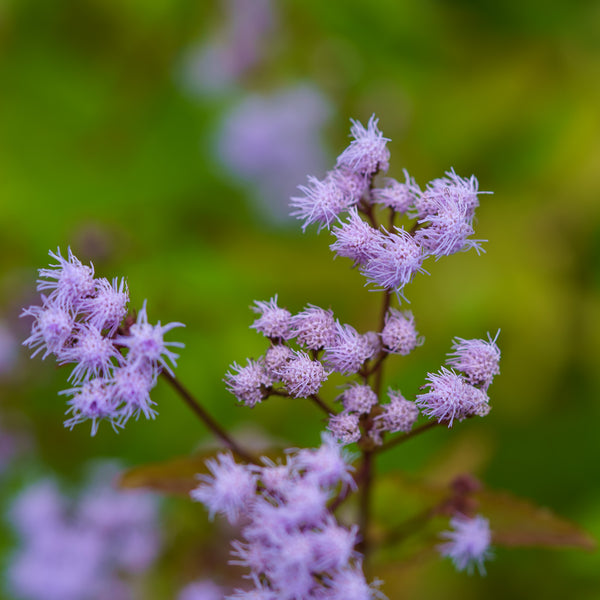
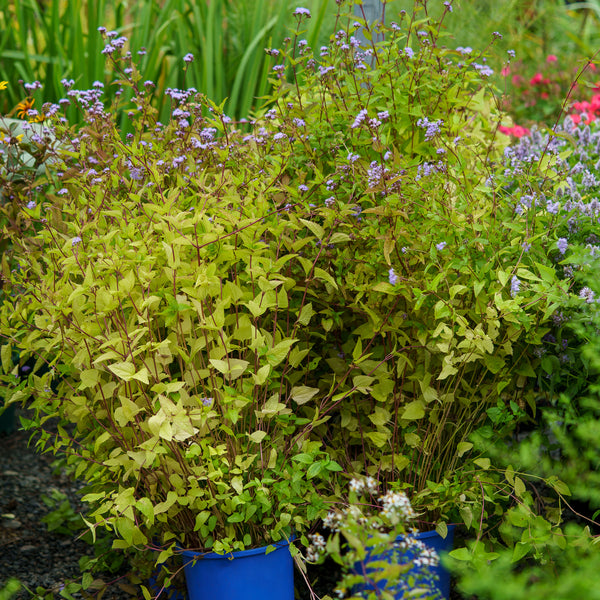
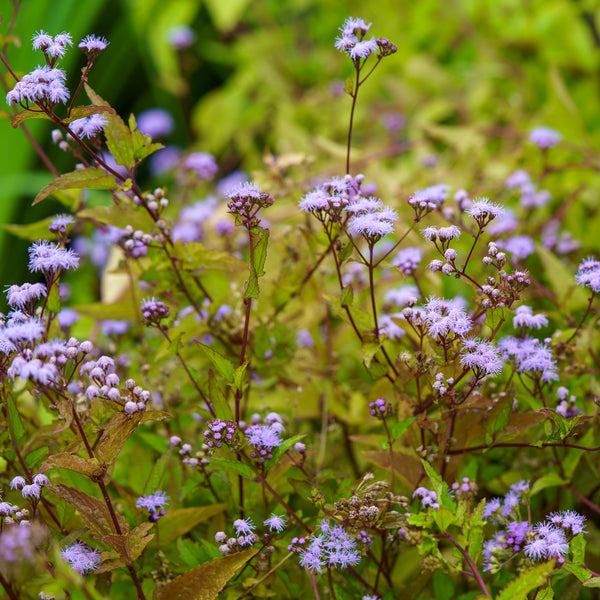
Blue Mistflower, also known as Mistflower and Hardy Ageratum, fills late-season gaps with soft, fuzzy clusters of blue to blue-violet flowers that keep a border looking alive into fall. It spreads into a loose, groundcover-style patch, so it is a great way to knit plantings together and create a natural, finished look. Pollinators flock to it when nectar is especially valuable, which adds movement and energy to the garden. If you have a sunny to lightly shaded spot with consistent moisture, this plant delivers long-lasting color with minimal effort.
Distinctive Features
This herbaceous perennial produces flat-topped clusters of fluffy, misty blue flowers from late summer into fall, often peaking in September and October. The foliage is medium green with a slightly coarse texture, and stems can show a purplish cast. It spreads by rhizomes and can form broad colonies in favorable conditions, which makes it excellent for naturalizing but something to site thoughtfully in tighter beds. Mature size is typically 1 to 3 feet tall and 2 to 3 feet wide, with spread increasing over time.
Growing Conditions
- Soil: Average to moist, well-drained soil with organic matter, and it tolerates heavier soils if drainage is acceptable.
- Water: Moderate, keep evenly moist during establishment and provide supplemental water during dry spells.
- Zones: USDA Zones 5 to 9.
- Notable Traits: Spreads by rhizomes and can be vigorous, attracts butterflies and bees, and deer resistance is variable.
Ideal Uses
- Focal Point: Mass it as a focal point in late season where a broad sweep of blue flowers can carry the border into fall.
- Rain Gardens: Use where soil stays evenly moist, including rain garden edges and low spots with good drainage.
- Naturalizing: Plant in meadow-style areas or larger beds where it can spread and form a soft, unified drift.
- Border Filler: Tuck between taller perennials to knit gaps together and support late-season pollinators.
Low Maintenance Care
- Containment: Edge or thin colonies as needed to keep spread in bounds.
- Cutback: Cut back stems in late winter or early spring before new growth begins.
- Watering: Water during prolonged drought to maintain foliage quality and sustain flowering.
- Division: Divide or lift and reset sections in spring if colonies become crowded or you want to share plants.
Why Choose Blue Mistflower?
- Late-Season Color: Blue to blue-violet flower clusters brighten the garden from late summer into fall.
- Pollinator Support: Flowers provide strong nectar value for butterflies and bees when many plants are finishing.
- Easy Coverage: Spreading habit helps fill space and create a cohesive, finished look in larger beds.
- Flexible Siting: Performs in full sun to part shade as long as moisture is reasonably consistent.
Blue Mistflower is at its best when you give it room to drift, letting the soft blue bloom read as a calm, late-season layer rather than a single accent. Pair it with grasses and warm-toned fall bloomers for contrast that looks intentional and seasonally rich. Keep moisture steady and manage spread with simple edging, and it will reward you with months of color and wildlife activity. If your garden needs a late-season workhorse with a natural look, this plant fits beautifully.

Plant Detectives Shipping Guide
Nationwide plant shipping made easy. Learn how we ship trees, shrubs, annuals and perennials. No order too big or too small. Fast, careful, and contractor-friendly.

OUR SIZING
Not sure what 2 inch B&B or 30 Gallon Clump really means? This guide breaks down all our plant size terms so you know exactly what to expect, whether you're ordering online or picking up at our nursery. From caliper measurements to container volumes, we've decoded our system to help you shop with confidence.