
Eastern Red Cedar


Eastern Red Cedar (Juniperus virginiana)
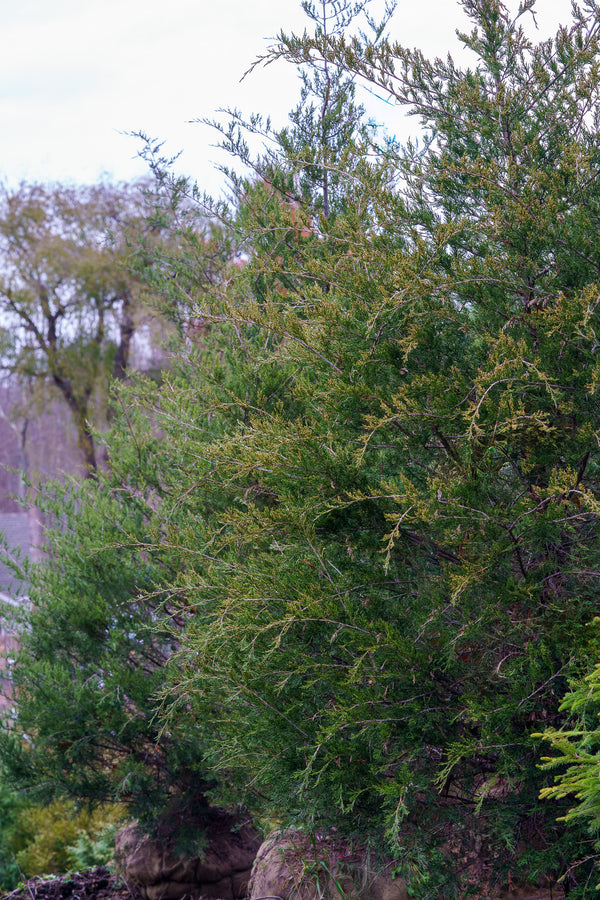
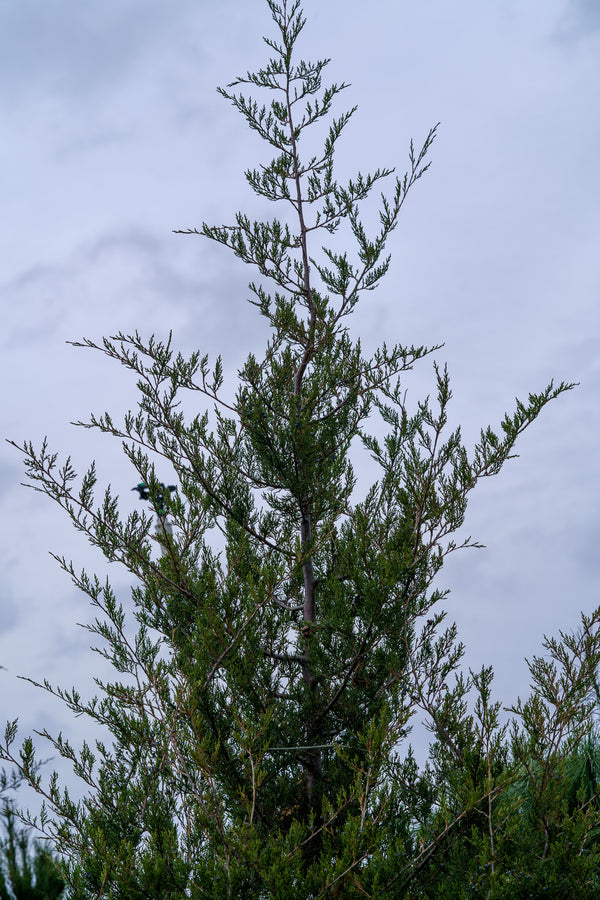
Eastern Red Cedar, Juniperus virginiana, is a tough, adaptable native evergreen tree valued for its dense foliage, strong vertical presence, and reliability in a wide range of conditions. Seed grown plants vary somewhat in shape, but most form a narrow pyramidal to columnar outline with rich green foliage that can take on bronzy tones in winter. Small berry like cones on female trees are an important winter food source for birds, and the naturally durable wood and evergreen character make Eastern Red Cedar a classic choice for shelterbelts, windbreaks, and long term structure in the landscape.
Distinctive Features
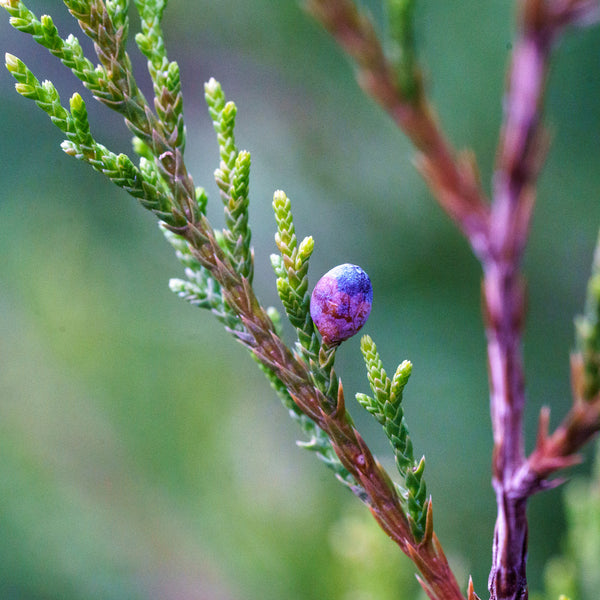
Eastern Red Cedar typically matures 30 to 40 feet tall and 15 to 20 feet wide, though size can vary with soil, climate, and seed source. Foliage begins as soft, needle like growth on young plants and transitions to tighter, scale like sprays as trees mature, giving a dense, textured look that holds year round. Color ranges from medium to deep green in the growing season, often with a hint of blue gray, then shifts to bronzy or copper tones in cold weather. The small bluish cones on female trees are surrounded by a waxy coating and are highly attractive to birds, which adds wildlife value as well as visual interest in winter.
Growing Conditions
- Light: Prefers full sun for best density and shape; tolerates light shade but may become thinner and more open with less direct light.
- Soil: Adapts to a wide range of well drained soils, including sandy, rocky, or slightly alkaline ground; does not perform well in heavy, waterlogged sites.
- Water: Water regularly during the first few seasons to establish deep roots, then only during extended dry periods; naturally drought tolerant once established.
- Hardiness: Suitable for cold winter climates and hot summers when sited in full sun and good drainage.
- Size: Medium sized evergreen tree, often 30 to 40 feet tall and 15 to 20 feet wide at maturity, with a pyramidal to columnar habit.
- Growth Rate: Moderate grower that builds height and density steadily over a number of years.
Ideal Uses
- Evergreen Focal Point: Plant as a single specimen in open lawn, near property corners, or at the end of a drive where its strong form serves as a year round focal point.
- Windbreaks and Shelterbelts: Excellent for planting in rows or staggered bands to slow wind, catch drifting snow, and provide shelter for wildlife.
- Privacy Screens: Use in informal lines or mixed evergreen groupings to create tall, long lasting screening along property lines and roads.
- Native and Wildlife Gardens: Ideal for native themed plantings where berries and dense cover support birds and small mammals.
- Farm, Field, and Large Properties: Well suited to open sites, fence lines, and the edges of pastures where its durability and low maintenance nature are especially valuable.
Low Maintenance Care
- Watering: After establishment, water deeply but infrequently, allowing the soil surface to dry slightly between waterings to encourage strong, deep roots.
- Pruning: Requires very little pruning; remove only dead, broken, or wayward branches as needed to maintain clearance or improve structure.
- Fertilizing: In average garden soils, fertilizer is rarely necessary; if growth appears weak, apply a balanced, slow release fertilizer lightly in early spring.
- Mulching: Apply a 2 to 3 inch layer of mulch around the root zone, keeping it a few inches away from the trunk, to conserve moisture and suppress weeds without trapping excess moisture against the bark.
- Protection: Choose a sunny, open site with good air circulation and drainage; avoid planting in low spots where water may collect.
Why Choose Eastern Red Cedar?
- Native Durability: A North American native tree that is well adapted to local climates and a range of soils, with proven long term performance.
- Year Round Structure: Dense evergreen foliage and upright form provide structure, screening, and winter interest in every season.
- Drought and Heat Tolerant: Once established, handles dry, lean sites and hot summers with minimal supplemental water.
- Wildlife Value: Berries and dense cover support birds and wildlife, adding ecological benefits to the landscape.
- Versatile Design Role: Works as a single focal point, a component in windbreaks and screens, or as part of larger native and mixed evergreen plantings.
With its sturdy native character, dependable evergreen foliage, and ability to serve as both a practical screen and a strong focal point, Eastern Red Cedar is a valuable choice for landscapes that need long lived structure, wildlife support, and low maintenance performance.

Plant Detectives Shipping Guide
Nationwide plant shipping made easy. Learn how we ship trees, shrubs, annuals and perennials. No order too big or too small. Fast, careful, and contractor-friendly.

OUR SIZING
Not sure what 2 inch B&B or 30 Gallon Clump really means? This guide breaks down all our plant size terms so you know exactly what to expect, whether you're ordering online or picking up at our nursery. From caliper measurements to container volumes, we've decoded our system to help you shop with confidence.