
Spider Plant


Spider Plant (Chlorophytum comosum)
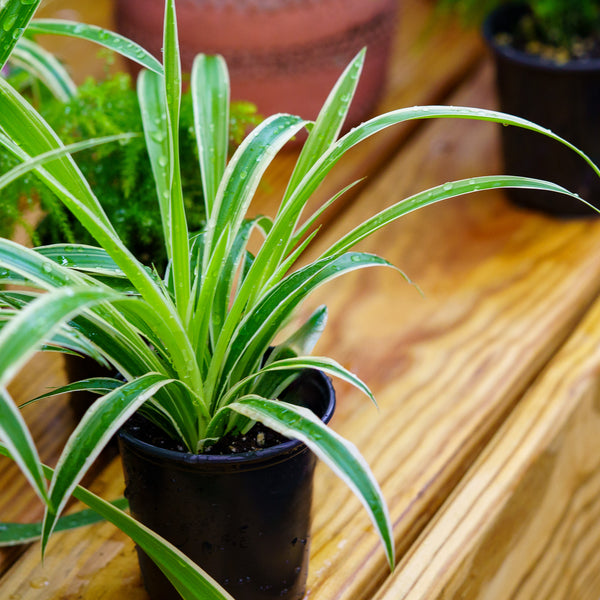
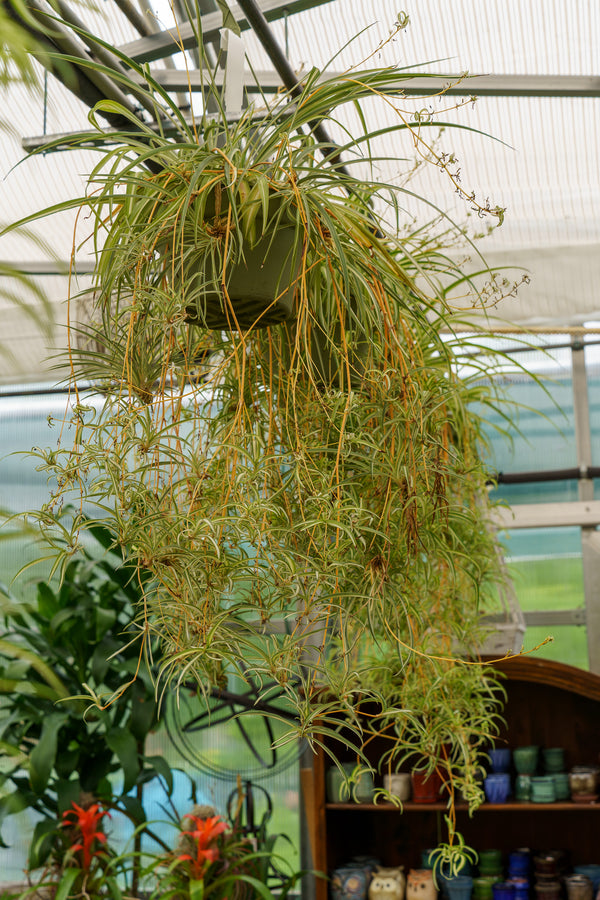
Spider Plant is a reliable, easy houseplant that fills a space with arching, fountain-like foliage and a clean, finished look. It adapts well to typical home conditions, bouncing back even when care is not perfect. In bright, indirect light it grows faster and often produces long stems with baby plantlets that add movement and interest. It is a simple way to add greenery to shelves, windows, and hanging baskets with minimal effort.
Distinctive Features
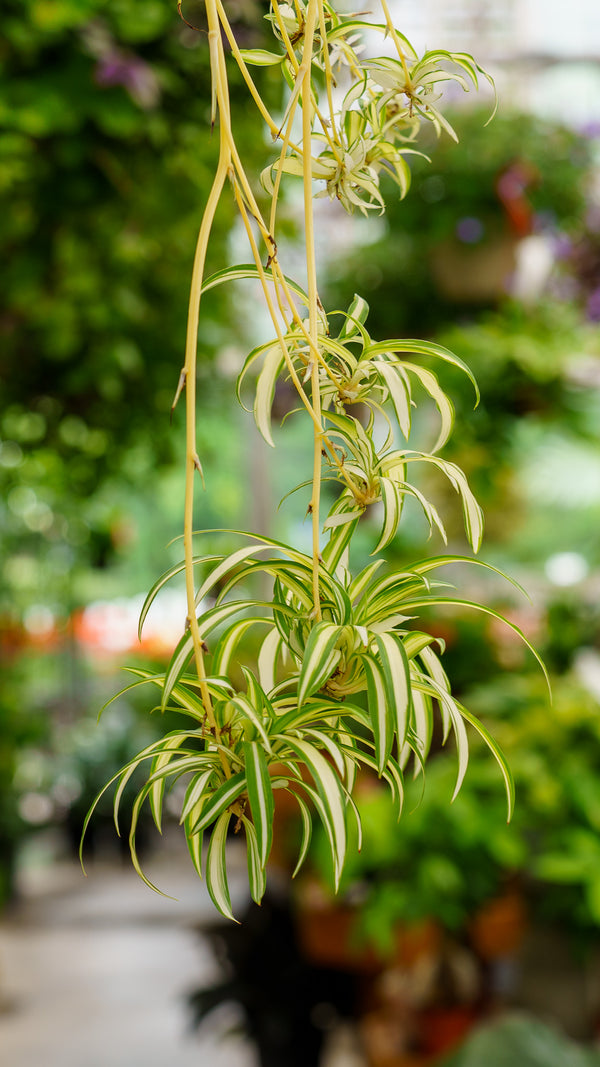
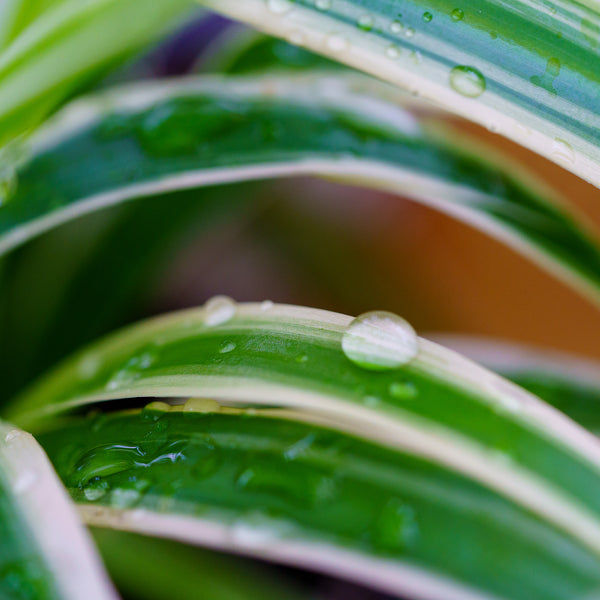
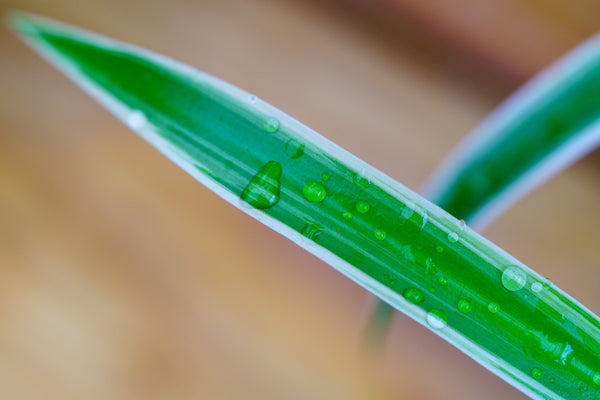
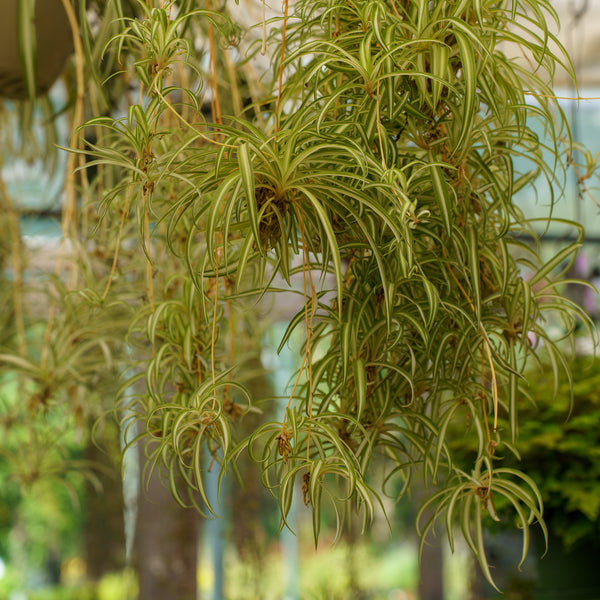
This clumping plant forms narrow, strap-like leaves that are usually green or green with white or cream striping, depending on the selection. It produces slender arching stems that carry small white flowers and then plantlets, which can be rooted to start new plants. Thick, fleshy roots store moisture, helping the plant tolerate inconsistent watering and making it a forgiving choice for busy households.
Growing Conditions
- Sun: Bright, indirect light is best, with lower light tolerated but with slower growth and fewer plantlets.
- Soil: Well-drained potting mix in a container with drainage holes, avoiding heavy mixes that stay wet.
- Water: Water when the top 1 to 2 inches of soil are dry, then water thoroughly and drain excess.
- Humidity: Average indoor humidity is usually fine, with higher humidity helpful for cleaner leaf tips.
- Zones: USDA Zones 9 to 11 outdoors, typically grown as a houseplant elsewhere.
- Mature Size: About 12 to 24 inches tall and 12 to 36 inches wide, with arching stems extending beyond the clump.
Ideal Uses
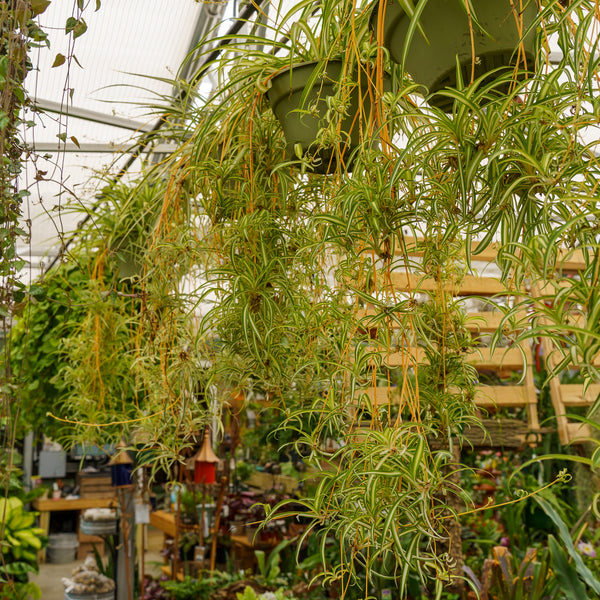
- Focal Point: Use Spider Plant as a focal point in a hanging basket where the arching leaves and trailing plantlets create a full cascade.
- Shelves and Ledges: Place on higher surfaces so foliage can spill and soften edges naturally.
- Beginner Houseplant: Keep as an easy starter plant that stays attractive with a simple routine.
- Office Greenery: Add near bright, indirect light for a tidy plant that makes workspaces feel more inviting.
- Mixed Indoor Displays: Pair with broader-leaved plants to add fine texture and movement in a grouped arrangement.
Low Maintenance Care
- Watering Rhythm: Avoid overwatering and do not let the pot sit in water, since soggy soil can stress roots.
- Grooming: Trim brown tips and remove older leaves at the base to keep the plant looking fresh.
- Light Adjustment: Move closer to brighter light if growth stretches or variegation fades.
- Feeding: Feed lightly during spring and summer to support steady growth, reducing feeding in winter.
- Repotting: Repot when roots crowd the pot, since the plant often grows best slightly root-bound.
Why Choose Spider Plant?
- Easy Care: Forgiving growth habit makes it a dependable plant for many indoor conditions.
- Trailing Plantlets: Produces baby plants that add movement and make propagation simple.
- Fast Fullness: Fills in quickly in bright, indirect light and creates a lush, arching look.
- Versatile Styling: Works in hanging baskets, shelf pots, and tabletop containers with equal success.
- Long-Term Value: A single plant can be multiplied into many through plantlets and division.
Spider Plant performs best when you give it bright, indirect light and a watering routine that lets the top of the soil dry slightly between drinks. Keep it in a draining pot, trim as needed, and it will stay full and attractive for years. When it starts producing plantlets, you can root them to expand your collection or share easy wins with friends.

Plant Detectives Shipping Guide
Nationwide plant shipping made easy. Learn how we ship trees, shrubs, annuals and perennials. No order too big or too small. Fast, careful, and contractor-friendly.

OUR SIZING
Not sure what 2 inch B&B or 30 Gallon Clump really means? This guide breaks down all our plant size terms so you know exactly what to expect, whether you're ordering online or picking up at our nursery. From caliper measurements to container volumes, we've decoded our system to help you shop with confidence.