
Olive Tree


Olive Tree (Olea europaea)
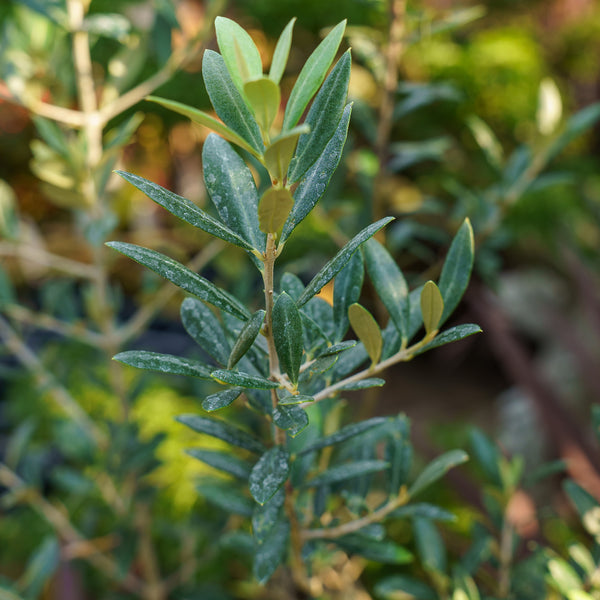
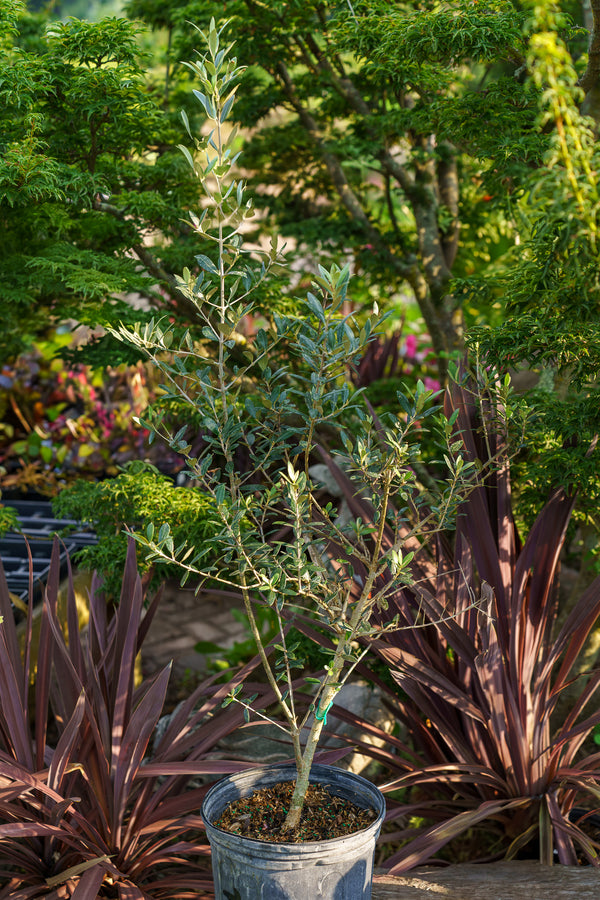
Olive Tree brings a calm, Mediterranean feel with silvery foliage and a naturally sculptural form that looks good in every season. In the ground it develops into a character-filled evergreen tree, and in a container it stays smaller while still delivering that classic look for patios, entries, and sunny indoor spaces. Once established, it handles heat and dry spells better than many ornamental trees, making it a practical choice for bright, well-drained sites. Small, creamy white flowers can appear in the warm season, and depending on the selection and conditions, fruit may follow.
Distinctive Features
Narrow, gray-green leaves with a paler, silvery underside create a soft shimmer in sun and breeze, and the trunk can become attractively gnarled with age. Olive Tree typically carries small clusters of creamy white flowers in late spring to summer, and fruit, when produced, matures from green to dark purple to black. Growth is generally slow to moderate, and the plant responds well to selective pruning for a clean canopy or a more architectural silhouette.
Growing Conditions
- Sun: Full sun for best density, strongest growth, and the best chance of flowering and fruiting.
- Soil: Well-drained soil is essential, including sandy or rocky soils, and avoid heavy, wet ground.
- Water: Water regularly to establish, then allow the soil to dry slightly between deep waterings once rooted in.
- Zones: USDA Zones 8 to 10 outdoors, and grow in containers with winter protection in colder regions.
- Mature Size: About 20 to 30 feet tall and 15 to 25 feet wide in the landscape, and often 6 to 10 feet tall in containers with pruning.
Ideal Uses
- Focal Point: Use as a focal point near an entry or patio where the silvery foliage and sculptural trunk can define the space.
- Containers: Plant in large pots for decks and courtyards, bringing a refined, evergreen look to hardscape areas.
- Mediterranean-Style Gardens: Pair with herbs and drought-tough perennials for a cohesive, sun-ready planting style.
- Evergreen Structure: Use to add year-round form and texture in mixed borders or open lawn settings.
- Topiary and Training: Train and prune for standards or cloud-like branching when you want a more designed silhouette.
Low Maintenance Care
- Watering: Deep water during the first growing seasons and during extended drought, especially for container plants.
- Pruning: Prune lightly to shape and remove crossing wood, focusing on airflow and a strong branch framework.
- Drainage: Prioritize sharp drainage in ground or pots, since consistently wet soil can lead to root stress.
- Feeding: Feed lightly in spring if needed, since overly rich feeding can push soft growth at the expense of structure.
- Winter Protection: In colder regions, protect container plants from hard freezes and drying winds to prevent leaf drop and branch dieback.
Why Choose Olive Tree?
- Iconic Silvery Foliage: Gray-green leaves add a refined, sunlit look that pairs well with almost any palette.
- Drought Tolerance: Once established, it handles heat and dry spells well in well-drained soil.
- Evergreen Presence: Keeps structure and color year-round, even when other plants are dormant.
- Container Versatility: Adapts well to large pots, letting you bring the look to patios and bright indoor spaces.
- Browsing Tolerance: Foliage is often less attractive to deer than many ornamentals, though young growth may still be sampled in high-pressure areas.
Olive Tree is at its best in full sun with excellent drainage and a watering rhythm that favors deep soakings over constant moisture. Use it to add evergreen structure, soft silver color, and a lived-in, architectural feel that improves with time. Whether planted in the ground or grown in a container, it brings a timeless look that makes outdoor and indoor spaces feel more intentional.

Plant Detectives Shipping Guide
Nationwide plant shipping made easy. Learn how we ship trees, shrubs, annuals and perennials. No order too big or too small. Fast, careful, and contractor-friendly.

OUR SIZING
Not sure what 2 inch B&B or 30 Gallon Clump really means? This guide breaks down all our plant size terms so you know exactly what to expect, whether you're ordering online or picking up at our nursery. From caliper measurements to container volumes, we've decoded our system to help you shop with confidence.