
Eastern Hophornbeam
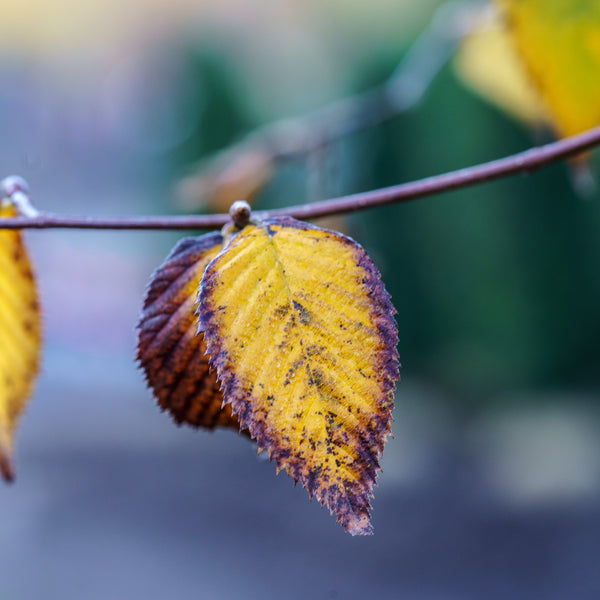


Eastern Hophornbeam (Ostrya virginiana)
Eastern Hophornbeam is a tough, adaptable native tree that brings calm shade and a naturally refined look to residential landscapes. Also known as Ironwood or Leverwood, it stays in a manageable size range while developing a dense canopy that feels established without overwhelming the space. It handles a wide range of soils once rooted in, including drier sites, making it a practical choice when you want a tree that does not need constant attention. Plant it where you want steady structure, clean foliage, and a long-lived backbone for the garden.
Distinctive Features
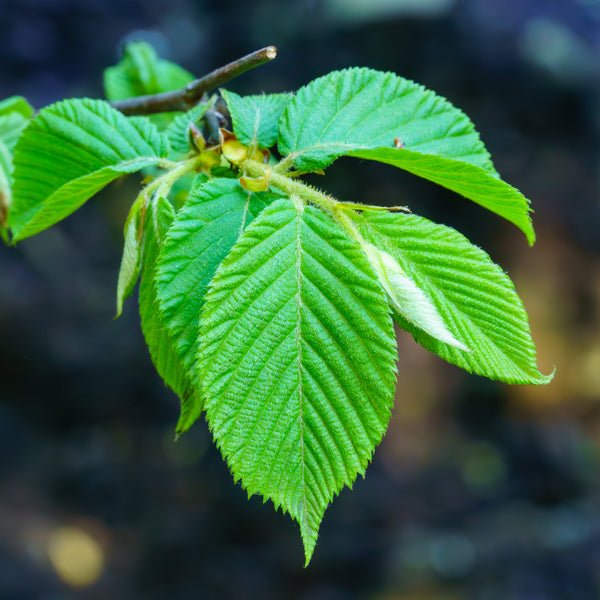
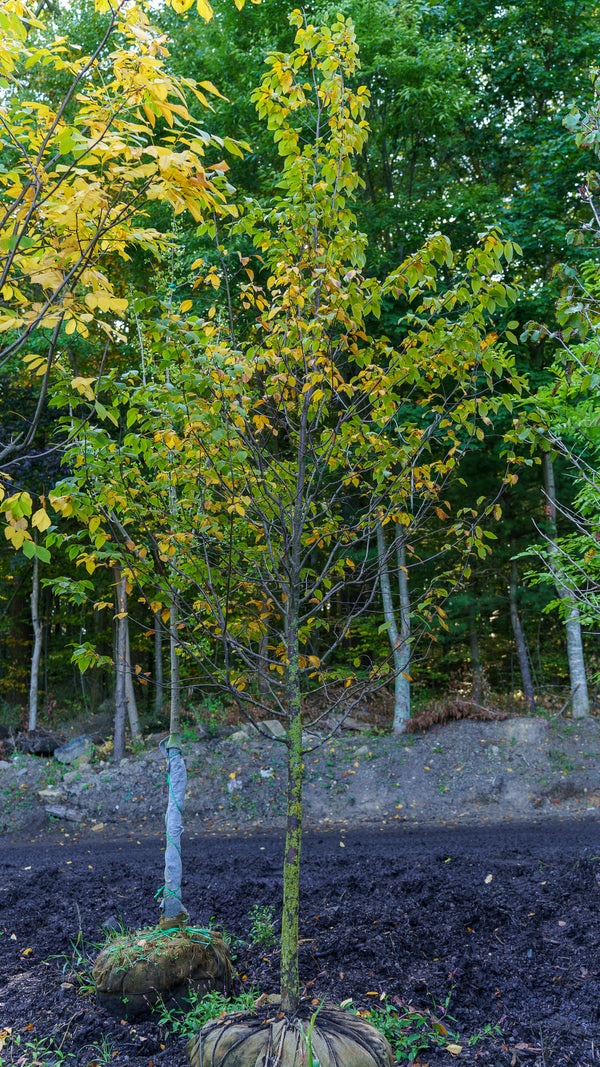
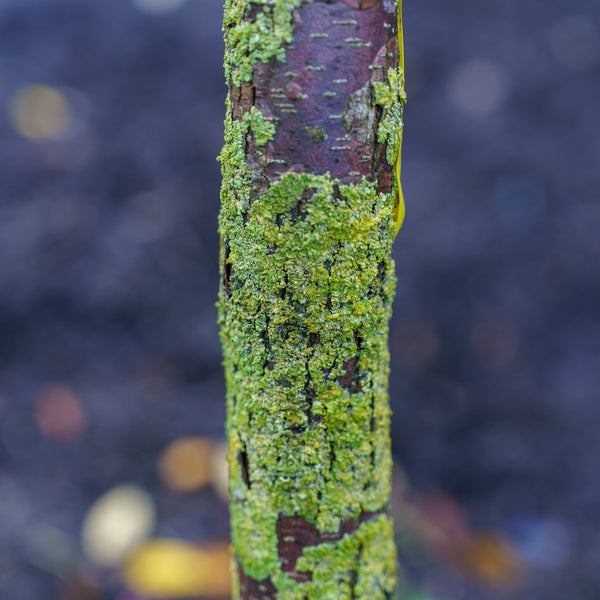
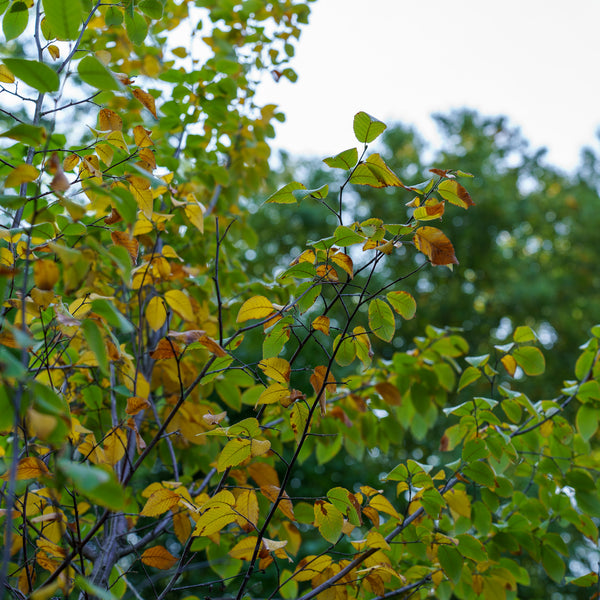
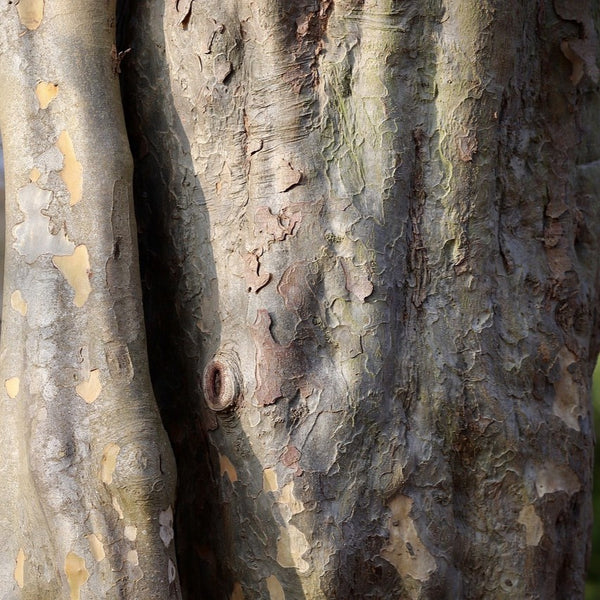
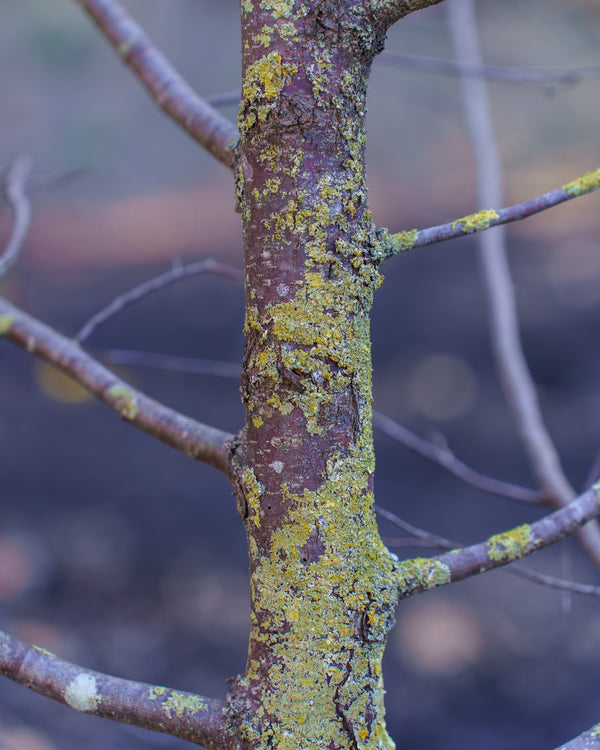
This slow to moderate growing understory tree has a rounded to oval crown with finely textured, serrated leaves and attractive bark that becomes plated and shaggy with age. Spring catkins are subtle, but the fruit is memorable, papery hop-like clusters that hang in late summer and fall and add texture even after the leaves drop. Foliage is medium green through the growing season, often turning yellow in fall, and the overall form reads natural and woodland-ready. It is valued for durability, shade tolerance, and an easy, native look that pairs well with both formal and naturalistic plantings.
Growing Conditions
- Sun: Full sun to partial shade.
- Soil: Moist, well-drained soil is ideal, and it tolerates a range of textures including clay when drainage is reasonable.
- Water: Medium, water regularly during establishment, then it tolerates some drought once established.
- USDA Zones: 3 to 9.
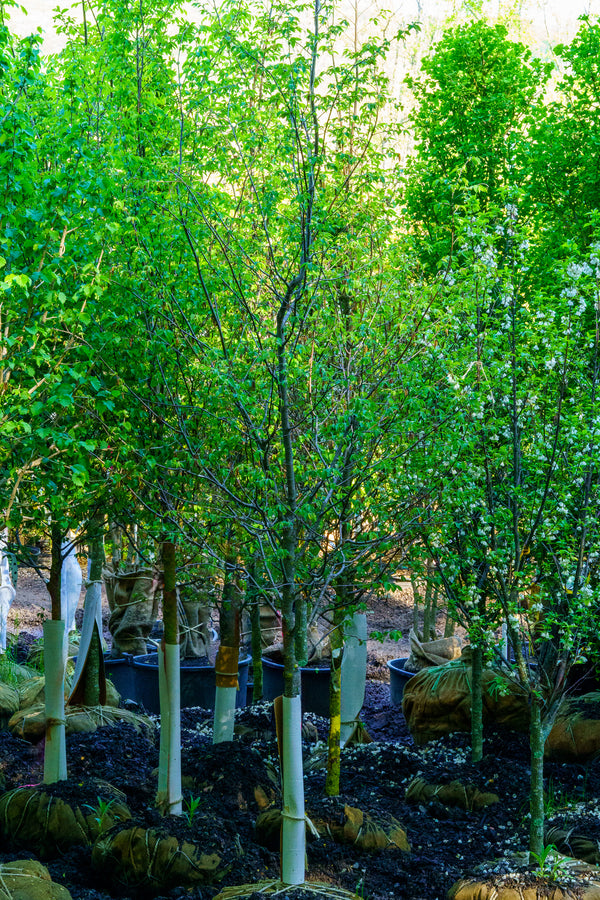
- Mature Size: About 25 to 40 feet tall and 20 to 30 feet wide.
- Habit: Upright when young, maturing to an oval or rounded canopy.
- Foliage: Medium green summer leaves, often yellow in fall.
- Flowers: Inconspicuous spring catkins.
- Fruit: Hop-like, papery clusters with small nutlets that mature in late summer to fall.
Ideal Uses
- Focal Point: Use as a specimen where the textured bark and hop-like fruit clusters can reward close viewing through the seasons.
- Woodland Edge: Plant along wooded borders for a native canopy layer that looks natural and settles in over time.
- Small Shade Tree: Add to lawns or garden edges where you want light shade without an oversized footprint.
- Naturalized Plantings: Mix into native landscapes for durable structure and wildlife value.
- Backbone Tree: Use as a steady green framework behind shrubs and perennials to make the whole bed feel more anchored.
Low Maintenance Care
- Pruning: Prune in late winter to remove crossing branches and improve structure, keeping cuts light to preserve the natural form.
- Watering: Deep water during the first one to two growing seasons and during extended drought to reduce stress.
- Mulching: Mulch over the root zone to conserve moisture and moderate soil temperatures, keeping mulch off the trunk.
- Soil Care: Improve heavy soils with organic matter and focus on drainage rather than frequent feeding.
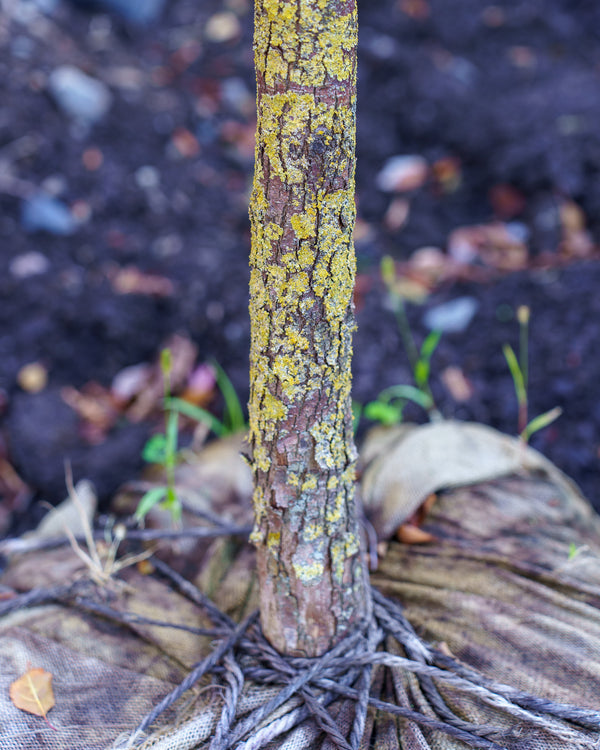
- Protection: Young trees may benefit from trunk protection in high-traffic or wildlife areas while they establish.
Why Choose Eastern Hophornbeam?
- Native Durability: Adaptable to many landscape conditions once established, including some dry sites.
- Manageable Scale: Provides real shade and structure without becoming an oversized tree for residential spaces.
- Seasonal Texture: Hop-like fruit clusters add interest from late summer into fall.
- Low-Fuss Form: Naturally attractive canopy with minimal pruning needs once the structure is set.
- Deer Tolerance: Often less appealing to deer than many trees, though browsing can still occur.
If you want a dependable native tree that looks right in almost any setting, Eastern Hophornbeam is a strong choice. Give it reasonable drainage, steady moisture while it establishes, and a little time, and it will develop into a long-lived shade tree with quiet character and year-round value.

Plant Detectives Shipping Guide
Nationwide plant shipping made easy. Learn how we ship trees, shrubs, annuals and perennials. No order too big or too small. Fast, careful, and contractor-friendly.

OUR SIZING
Not sure what 2 inch B&B or 30 Gallon Clump really means? This guide breaks down all our plant size terms so you know exactly what to expect, whether you're ordering online or picking up at our nursery. From caliper measurements to container volumes, we've decoded our system to help you shop with confidence.