
Red Buckeye


Red Buckeye (Aesculus pavia)
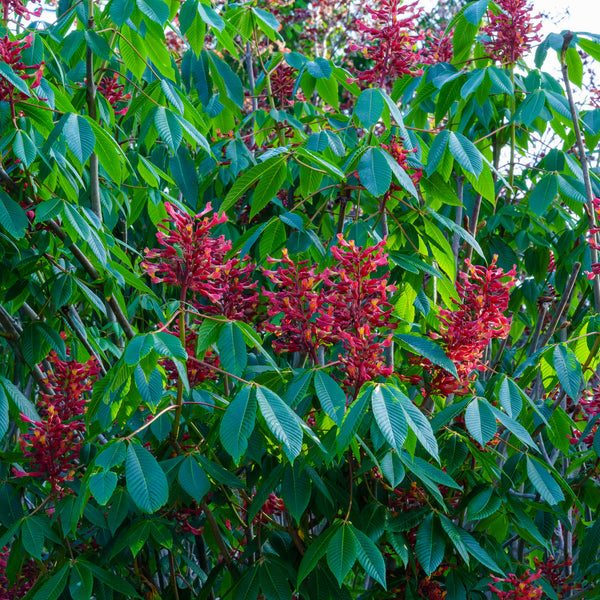
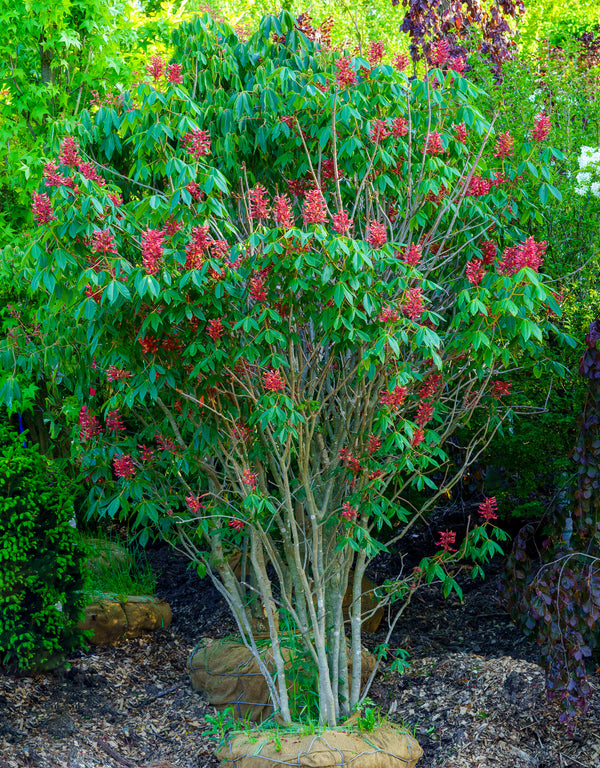
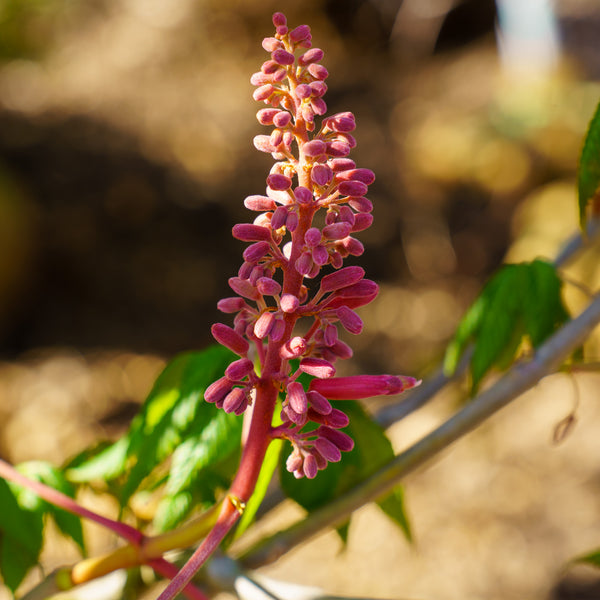
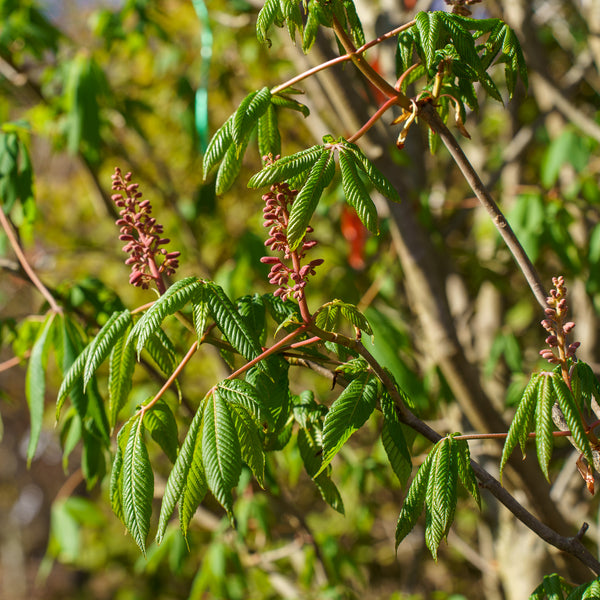
Red Buckeye is a small native tree or large shrub that brings a burst of red spring flowers when the landscape is just getting started. Its upright clusters of tubular blooms are a magnet for hummingbirds and add bold color without needing a complicated care routine. The clump-forming habit creates a full, multi-stem presence that works well as a natural screen or a standout specimen near a woodland edge. Once established, it handles typical garden conditions with steady performance and a strong seasonal payoff.
Distinctive Features
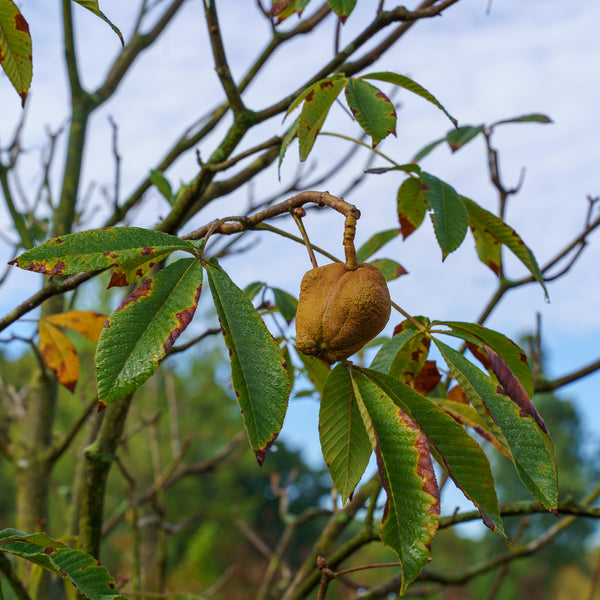
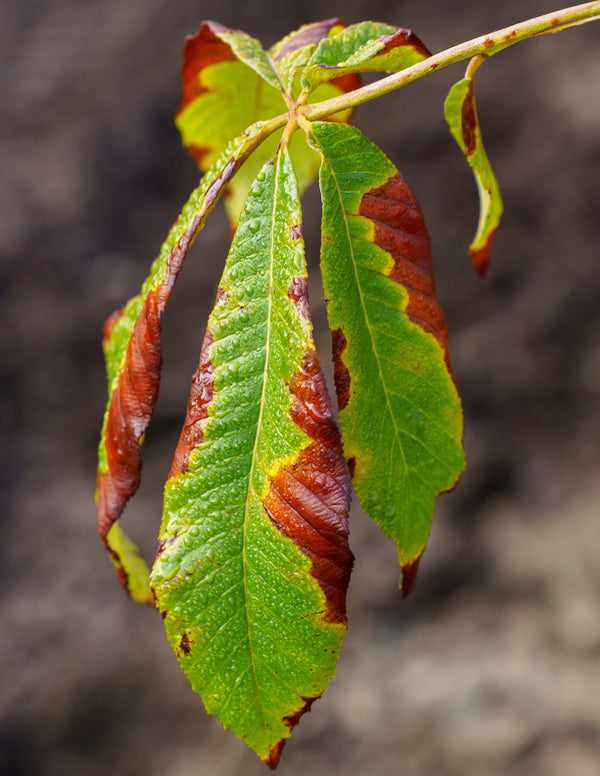
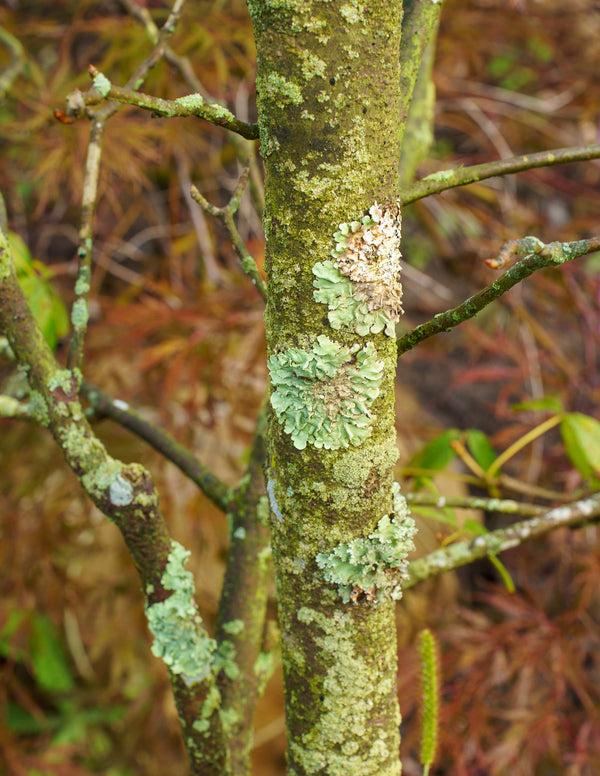
In spring, Red Buckeye produces showy upright clusters of red to orange-red tubular flowers, followed later by rounded seed capsules that contain glossy brown buckeyes. The palmate leaves are dark green through early summer, but foliage can look tired and may drop early in late summer heat, so it is best paired with companion plants that carry the late-season show. Its natural form is irregular and rounded, often growing as a clump of stems rather than a single-trunk tree. Seeds are poisonous if ingested, so place thoughtfully in family spaces.
Growing Conditions
- Sun: Full sun to part shade, with light shade or afternoon protection helpful in hotter climates.
- Soil: Moist, well-drained soil with organic matter, and it tolerates a range of soils when drainage is reliable.
- Water: Moderate, keep evenly moist during establishment, then deep water during extended drought.
- USDA Zones: Hardy in zones 5 to 9.
- Mature Size: Typically 10 to 20 feet tall and 10 to 15 feet wide.
- Notable Traits: Spring bloom for hummingbirds, clump-forming habit, and poisonous seeds.
Ideal Uses
- Focal Point: Use as a focal point where the red spring flower spikes can lead the season and pull attention to a main view.
- Woodland Edge: Plant at the edge of trees for a natural look with better leaf quality than in hot, exposed sites.
- Natural Screening: Group plants to form an informal screen with spring color and dense, multi-stem structure.
- Pollinator Gardens: Add to wildlife-focused beds to support hummingbirds and early-season pollinator activity.
- Under Power Lines: Use as a small-scale tree alternative where mature height must stay modest.
Low Maintenance Care
- Pruning: Prune in late winter to shape or thin, and remove weak or crossing stems to keep a sturdy framework.
- Watering: Water regularly the first season, then provide supplemental water in prolonged heat to reduce stress and early leaf drop.
- Mulching: Mulch to conserve moisture and cool the root zone, keeping mulch pulled back from stems.
- Placement: Site where late-season leaf drop is acceptable or is masked by nearby perennials and shrubs.
- Safety: Keep seed drop areas away from pets and children since buckeyes are poisonous if eaten.
Why Choose Red Buckeye?
- Spring Color: Red to orange-red flower clusters create a bold early-season display.
- Hummingbird Magnet: Tubular blooms are especially attractive to hummingbirds.
- Native Toughness: Reliable performance across a wide range of garden settings once established.
- Manageable Size: Small tree to large shrub scale fits residential landscapes and tighter planting areas.
- Natural Form: Multi-stem habit adds texture and structure that feels at home in woodland and native-style designs.
Red Buckeye is most effective when you give it good drainage, consistent moisture while it establishes, and a setting that appreciates spring fireworks and a natural outline. Pair it with plants that peak later in the season, and it becomes a strong backbone that starts the year with color and wildlife value. With sensible placement and light pruning, it delivers a dependable native presence with a memorable spring moment.

Plant Detectives Shipping Guide
Nationwide plant shipping made easy. Learn how we ship trees, shrubs, annuals and perennials. No order too big or too small. Fast, careful, and contractor-friendly.

OUR SIZING
Not sure what 2 inch B&B or 30 Gallon Clump really means? This guide breaks down all our plant size terms so you know exactly what to expect, whether you're ordering online or picking up at our nursery. From caliper measurements to container volumes, we've decoded our system to help you shop with confidence.